The easiest Cyprus snorkelling is on the southeast coast, where Protaras, Ayia Napa and Cape Greco offer sheltered coves. On calm mornings, these bays can have crystal clear water, but visibility varies.
You don’t need a boat or advanced skills for a memorable session. Konnos Beach and Fig Tree Bay are among the easiest swimming spots, while Green Bay is known for turtles, though sightings aren’t guaranteed. Pick a calm morning, enter slowly from sand or low rock, and stay near the cove’s edges where fish gather.
We’d base a snorkelling-focused holiday around Protaras or Ayia Napa. We’d treat the Akamas Peninsula as a separate, less straightforward day trip, with access and conditions checked locally.
Where shore snorkelling is at its easiest
The southeast remains the island’s most dependable area for shore snorkelling. Calmer bays, warm water and walk-in entries make it friendlier than exposed rocky sites.
This quick comparison helps you choose a first stop.
| Spot | Best for | Shore entry | Useful planning detail |
|---|---|---|---|
| Green Bay | Sea turtles and seagrass | Low rock or small beach | Shallow water, parking to recheck |
| Konnos Bay | Beginners and families | Sandy beach | Sheltered early, bus stop above |
| Fig Tree Bay | Central resort stays | Sandy beach | Snorkel around the offshore islet |
| Sirena Bay | Quiet, shallow swimming | Sandy entry | Check seasonal parking and services |
| Blue Lagoon, Akamas | Clear water and scenery | Usually by boat | Regular cars can’t reach it |
| Coral Bay | West coast holidays | Sandy beach | Look along the rocky edges |
| Amathus | Shallow historic shoreline | Gradual shore entry | East coast, check local access |
Water may look clear from the road yet turn choppy after a windy afternoon. We recommend arriving between 8am and 11am, before beaches stir up sand and boat traffic increases. A gently sloping seabed and low swell help beginners; recheck seasonal toilets, lifeguards, parking and bus timetables before travelling.
Green Bay for turtles and easy depth
Green Bay, also called Prasinada Bay, lies south of Protaras and roughly 2km from the resort centre. It has a small car park above the water, a short walk to the entry point, and shallow seagrass where green sea turtles may feed. Encounters aren’t guaranteed, so give the animals space and avoid swimming directly over them.
The bay drops gradually through roughly 3 to 9 metres in its main snorkelling area. Stay near the surface and scan darker seagrass patches rather than swimming straight out.
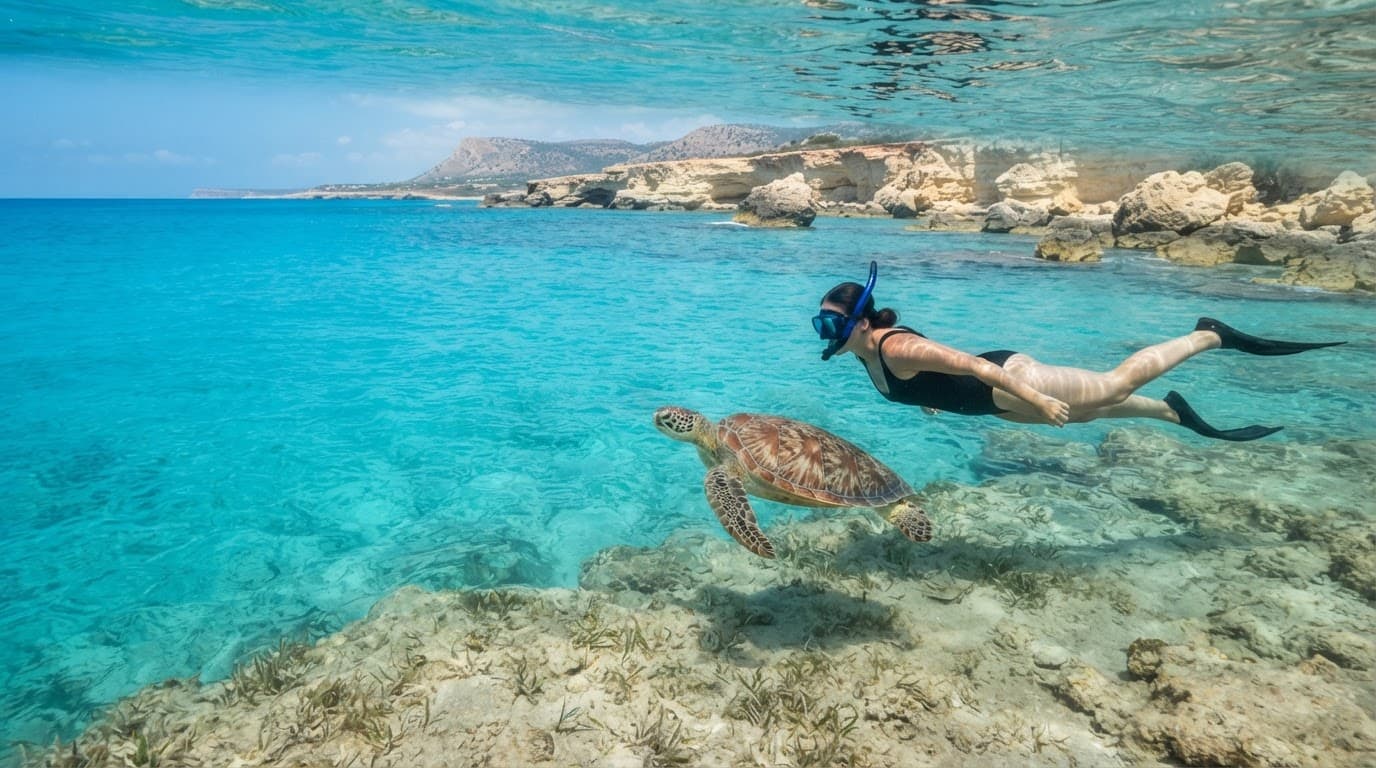
A sheltered first session near Konnos
This sheltered bay sits between Protaras and Ayia Napa, beneath pine-covered slopes near Cape Greco. The wider coast beyond is more exposed, but the easy sandy entry, sandy bottom and low swell suit beginners. Rocky sides usually support more marine life.
The 101 and 102 buses commonly connect the two resort areas with the bay, although you should confirm the current timetable before travelling. You can also find current Konnos Beach tours and visitor details when comparing boat trips with a simple shore session.
Protaras bays beyond the busiest beach
Protaras offers enough variety for several short snorkels without turning every day into a long drive. Fig Tree Bay is convenient, while smaller coves reward an earlier start.
Fig Tree Bay and its offshore islet
The resort’s best-known beach has a wide sandy centre, mostly suited to swimming. The water becomes more interesting near the rocky sides and small offshore islet.
Confident swimmers can reach the islet, around 90 metres from shore, in calm conditions. The crossing is optional, not an essential part of the snorkel. Don’t attempt it if a breeze pushes waves through the gap. A mask, fins and bright float improve visibility to boats.
Three parking areas sit around the bay, but they fill early in July and August. If you’re staying on the strip, walking is often less stressful than moving the car.
Sirena Bay for a quieter stop
Sirena Bay is a smaller, more tucked-away choice north of central Protaras. Regular snorkellers know it for rocky coves where marine life may concentrate. Occasional sea turtles are possible, although no encounter is guaranteed.
We prefer it when the larger beach feels too busy. At Sirena Bay, arrive early because the beach is compact, and keep your belongings light. Check current parking, toilets, beach-bar and water-sports information locally, rather than relying on older holiday posts.
Snorkelers should stay close to shore and check conditions before entering.
For a useful overview of turtle-friendly coves across the resort area, see this guide to snorkelling spots around Protaras.
Swimming with sea turtles responsibly
A turtle sighting is a privilege, not a target to chase. Green sea turtles and loggerhead sea turtles are distinct species, and current sources separate sightings from claims about feeding areas or nesting behaviour in Cypriot waters. Green Bay’s seagrass offers habitat, but it isn’t a guaranteed turtle site, and you may see nothing on a particular day.
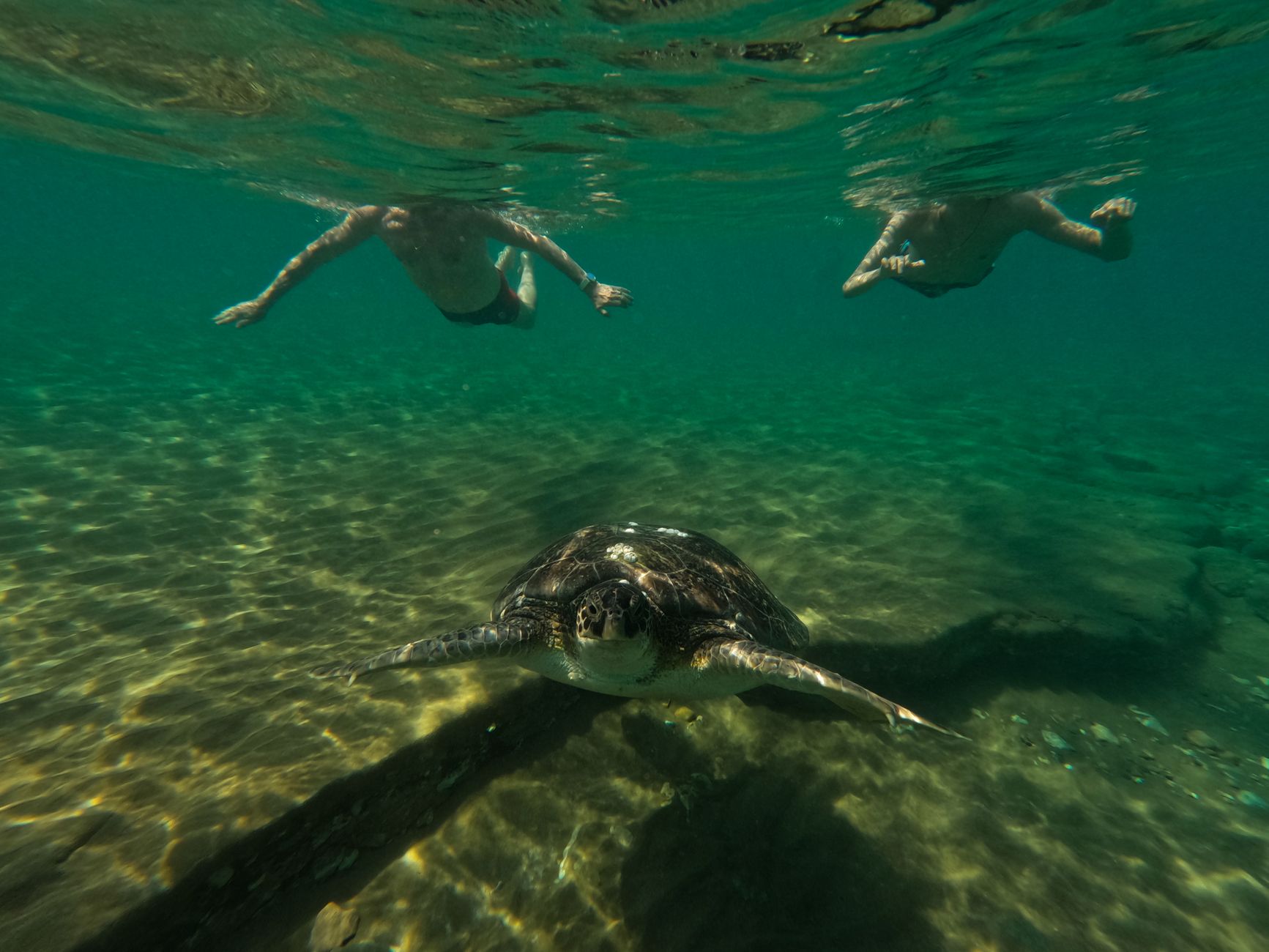
Photo by İlkin Hughes
Give turtles room to choose their route
As a cautious minimum, stay several metres away, and follow local signage or lifeguard instructions if they require more space. Snorkelers should remain horizontal in the water and never touch, feed, surround, block or pursue a turtle, or swim directly above it.
A turtle often surfaces without warning, so leave it a clear route to open water, especially if other snorkelers are nearby. The work of Cyprus Turtles shows why everyday behaviour in the Mediterranean Sea matters as much as protecting nesting beaches.
Avoid damage under your fins
Don’t stand on seagrass, reef-like rock shelves or underwater structures. Even shallow rock supports small fish, algae and sea urchins, while seagrass is an important feeding ground for marine life.
If you need to adjust your mask, move into a sandy patch first. The IUCN’s Mediterranean turtle conservation guidance also stresses the value of reducing disturbance around marine turtles.
Cape Greco’s rocky coves and fish life
Cape Greco National Forest Park has some of the island’s clearest water. Its rocky coves, deeper blue channels, slippery limestone and wind exposure make conditions more demanding than at sandy beaches.
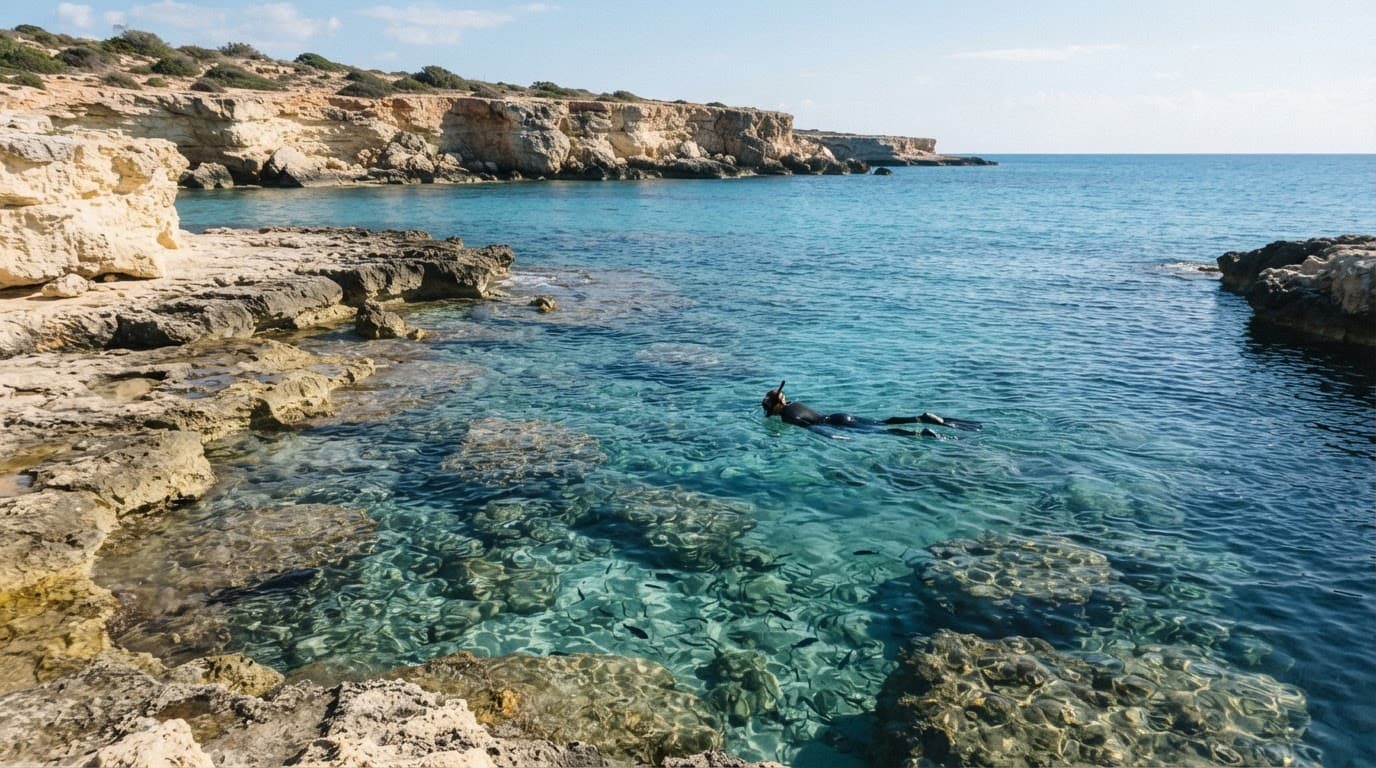
Konnos is the easiest place to begin, while less experienced snorkelers should choose a lifeguarded sandy entry. Around the limestone shelves, marine life may include damselfish, wrasse, bream, mullet and small shoals of silvery fish.
The Mediterranean Sea also receives species that entered through the Suez Canal, a process called Lessepsian migration. Rabbitfish and lionfish have been recorded in Cypriot waters, so check current local advice before entering. Don’t touch crevices or step on marine habitat. Lionfish spines are venomous, and sea urchins can cause painful injuries.
Wear water shoes for rocky access, and check for seasonal closures or protected-area restrictions before setting out. If the sea is surging against the rocks, don’t enter, and choose a sandy beach instead.
MUSAN and Cyprus’s underwater stories
MUSAN, the underwater museum near Katsarka Beach in Ayia Napa, offers a different kind of snorkel. Its sculptures sit on the seabed rather than a natural reef. Unlike a natural shore snorkel, this underwater museum is an organised art attraction, not a guaranteed wildlife site.
Access is usually through an organised snorkelling session or boat access, with conditions, booking arrangements and prices varying by season. Ask the current operator about meeting points, duration, age rules and cancellation terms. Confirm whether masks, fins and other snorkeling equipment, including buoyancy aids, are supplied.
Visibility and the apparent sculpture layout can change with sea state and crowding. Treat personal reports and online images, including generated ones, as indicative only; use current operator information to verify access. Stay off the sculptures, avoid kicking up sediment, and prioritise good buoyancy over speed when groups gather.
For a broader look at the island’s shore routes and underwater features, this Cyprus snorkelling spot guide is useful for comparing locations before you travel. Review it alongside current operator details, as listed prices and opening hours may be out of date.
Blue Lagoon and the Akamas Peninsula
The Blue Lagoon on the Akamas Peninsula is the picture-postcard choice, with pale rock and unusually bright turquoise water. It is not the same Blue Lagoon near Cape Greco.
Reach the Blue Lagoon by boat
Most visitors reach the lagoon on boat trips from Latsi, also written as Latchi, or through an authorised off-road excursion. Ordinary hire cars are limited by rough tracks and the area’s protected landscape.
Boat access is usually easier than attempting those tracks. Before paying, confirm the departure quay, operator authorisation, swim-stop duration, lifejacket policy and child rules. Check whether masks and fins are included, too.
The lagoon’s depth changes across the cove, with deeper water beyond the shoreline. If you’re travelling with children or less confident swimmers, use a buoyancy aid and stay near the boat or shallows.
Choose calm weather, not only blue skies
The Akamas Peninsula is less sheltered than Protaras. A hot, cloudless day can still bring enough wind to reduce surface visibility.
The water may look bright from shore, but wind can quickly reduce visibility. We’d keep the visit flexible and let calm weather, not sunshine alone, decide the day. If strong winds are forecast, spend the day in Paphos or visit the area another morning.
Paphos snorkelling at Coral Bay and White River
Paphos is better known for archaeology than snorkelling, yet it has worthwhile shore options when the sea is calm. Coral Bay is the easiest choice if you want sand underfoot and nearby facilities.
Coral Bay’s rocky edges
The centre of Coral Bay is wide, sandy and shallow, making entry easy for families. For marine life, follow either rocky headland while keeping well clear of swimmers and paddleboards.
Buses stop close to the beach in summer, but journey times vary with traffic and the seasonal timetable, so check the current route before setting out. It remains a sensible choice for families because you can retreat to the beach if conditions change.
Visibility on this coast varies more than in sheltered southeast bays. Check the water from the headland first, then skip the snorkel if waves are breaking across the rocks.
White River for confident swimmers
White River Beach, near Peyia, has sometimes clearer rocky pockets and a wilder feel. These impressions depend on the weather, so take drinking water, shade and proper footwear, and check whether lifeguards or other services are available.
The shallow edges can be rewarding, but personal impressions of clearer water should never override a morning sea-state check. Avoid it when there is swell, and don’t enter alone if you have not snorkelled from rocks before.
Amathus and the Limassol coast
East of Limassol, Amathus offers a shallow nearshore snorkel close to the ancient city. Its attraction is the mix of clear water and history, rather than dramatic marine life.
Shallow water near ancient Amathus
The coast around Amathus suits a relaxed mask-and-snorkel session. You can reach the area from Limassol by bus towards the Amathus Hotel stop, or by taxi and hire car. Check current public access, parking, facilities and archaeological-site opening details before setting out.
Keep expectations realistic. Amathus is the easier history-plus-swim pairing, not an all-day underwater destination. You won’t find a coral reef, but you may see small fish around stone and sandy gaps. Pair the swim with a visit to the archaeological site.
White Rocks needs a calm sea
The White Rocks area west of the city is known for chalky coastal formations and bright water. It suits experienced swimmers on a genuinely calm day, not beginners looking for an easy entry.
There are fewer facilities and more exposed rock here, so beginners and solo swimmers should avoid it. Check the current access point and safe exit route, and don’t enter during swell.
When to go for warm, clear water
Late May to October is the main snorkelling season. In the Mediterranean Sea, water temperature varies by coast and month, rising from the low 20s °C in late spring to the mid-to-high 20s in summer. August brings the warmest conditions, but beaches are busiest, and afternoon wind, swell, recent rain or boat traffic can reduce visibility.
July and August for warm water
In July and August, water temperature is usually at its highest, often around 26 to 29 °C depending on the coast and recent weather. You can stay in for longer without a wetsuit, especially in sheltered bays.
The trade-off is heat and crowds. Go early, check the morning forecast and local lifeguard flags, and carry water. Wind or boat traffic can still reduce visibility despite a sunny sky. Apply reef-safe sunscreen after swimming, or let it fully absorb before entering the water. Follow local marine-protection guidance, as residue can cloud your mask and sting your eyes.
May, June and September for quieter coves
May, June and September often offer a better balance. The sea is warm enough for comfortable swimming, while car parks and beach paths are less crowded. Visibility can still change with wind, swell, recent rain and boat traffic.
October can also work, particularly in the southeast, but weather becomes less predictable. Check the morning sea state, forecast and local lifeguard flags rather than assuming a sunny sky means calm water.
Gear, safety and local transport
A well-fitting mask matters more than expensive fins when choosing snorkeling equipment. Test it dry by inhaling gently through your nose. Check the strap and skirt for damage, and if it stays in place without the strap, it should seal well in the water.
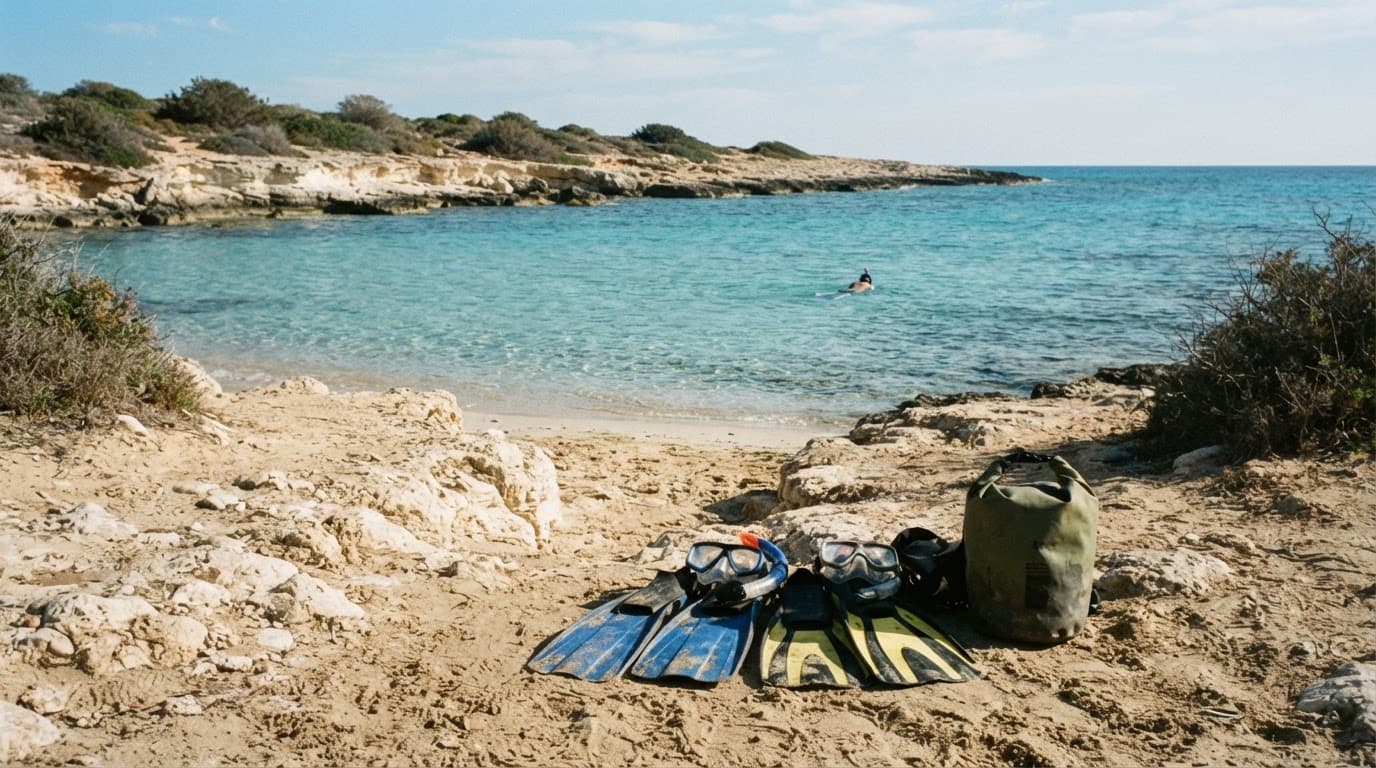
Pack for the entry, not only the swim
Take a mask, snorkel, short fins, water shoes, rash vest, dry bag and a bright surface float. Water shoes and the float are useful safety items, while fins and a rash vest are mainly for comfort. Use a properly fitted buoyancy aid where appropriate, but never treat it as a substitute for supervision.
For children, avoid a cheap full-face mask if it fits poorly or makes clearing water difficult. Choose equipment they can use comfortably and supervise them closely.
All snorkelers should check the exit route and lifeguard flags before entering a rocky cove. Waves that feel manageable on the way in can make slippery limestone difficult on the return.
If you see jellyfish, ask a lifeguard or nearby beach staff whether they are stinging species, then move elsewhere if needed. Don’t touch lionfish, urchins or unfamiliar animals.
Use buses where they make sense
OSEA’s summer network can include services between Ayia Napa, Cape Greco, Konnos, Protaras, Pernera and Paralimni. The Ayia Napa West Circle Line may also list a MUSAN Museum stop. Check current routes, stop names, fares, last buses and seasonal services on the day, as timetables aren’t guaranteed year-round.
Fig Tree Bay is usually walkable from central Protaras, while Green Bay is often simpler by taxi or hire car unless you’re staying nearby. For Paphos, Coral Bay has a bus stop by the beach. Confirm these connections and last services before setting out, because seasonal timetables can change.
Build a wider Cyprus holiday around the coast
A snorkelling morning fits well with other parts of the island, especially when afternoon wind picks up. We’d start in the water early, then follow it with an eastern-coast walk, village lunch or inland visit. If the western sea turns rough, make Paphos an archaeology day instead.
These related guides make useful additions to a flexible Cyprus itinerary:
- Eastern-coast walking routes and sea caves
- Resort beaches, quieter coves and local food stops
- Latsi, Polis and the western peninsula
- Paphos archaeological sites and coastal walks
- Limassol day trips, wineries and ancient ruins
Snorkellers usually ask
Where is the best place for snorkelling in Cyprus?
The southeast coast offers the easiest shore access, with Green Bay, Konnos Bay and Fig Tree Bay among the most practical choices. Protaras and Ayia Napa are convenient bases for calm coves and short snorkelling sessions.
Can you see turtles while snorkelling in Cyprus?
Green turtles and loggerhead turtles may be seen around Green Bay and other southeast coves, but sightings aren’t guaranteed. Keep several metres away, never touch or chase a turtle, and leave it a clear route to the surface.
What is the best time to go snorkelling in Cyprus?
Late May to October offers the warmest water, with July and August usually the hottest but busiest months. Arrive between 8am and 11am, when bays are often calmer and visibility is less affected by wind, swimmers and boat traffic.
Is Cyprus suitable for beginner snorkellers?
Yes, particularly at sandy, sheltered beaches such as Konnos Bay and Fig Tree Bay. Check the sea state and lifeguard flags before entering, and choose a sandy entry rather than exposed rock if you are unsure.
Do you need a boat to snorkel in Cyprus?
No, many of the island’s best beginner-friendly spots are accessible from shore. A boat is usually the simplest way to reach the Blue Lagoon in Akamas, while MUSAN access is generally arranged through an organised session or boat trip.
A clearer, safer way to snorkel in Cyprus
The southeast coast offers the most reliable mix of warm water, easy access and clear conditions. Green Bay is our personal first choice for wildlife sightings, though encounters are never guaranteed, while nearby bays suit anyone who prefers sand underfoot.
Keep your plans flexible, choose the morning and check conditions before entering. Give sea turtles plenty of space, watch patiently, and don’t touch or chase them. Cyprus rewards unhurried snorkellers far more than rushed ones.