Larnaca rewards travellers who leave space between plans. You can swim before breakfast, wander stone lanes by lunch, then eat grilled fish beside the sea at sunset.
This Larnaca travel guide is for a first visit that feels relaxed rather than rushed. I’d suggest three nights, though that’s not a fixed rule. Two full days can work if Larnaca is one stop on a wider Cyprus holiday.
The compact centre, nearby airport and walkable waterfront make Larnaca manageable for first-time visitors. Its best moments are also close enough to combine without filling every day with travel.
Key Takeaways
- Larnaca suits a relaxed three-night stay, with beaches, historic sights, the salt lake and waterfront dining all close to the compact centre.
- Start with Saint Lazarus Church, Finikoudes Promenade and Larnaca Fort, then use a second day for Mackenzie Beach, Larnaca Salt Lake and Hala Sultan Tekke.
- September, April, May and October offer a useful balance of warm sea temperatures and more comfortable sightseeing conditions than peak summer.
- Try Cypriot specialities such as sheftalia, kleftiko, grilled fish and meze in tavernas around Saint Lazarus Square and the old centre.
- Walk or use local buses within Larnaca, but consider hiring a car for Choirokoitia, Pano Lefkara and other inland or mountain trips.
A Larnaca travel guide for your first two days
Give the centre your first day, starting at the Church of Saint Lazarus, continuing along the Finikoudes Promenade and finishing at Larnaca Fort. This route links several historic sites with shade, coffee stops and places for a long lunch.
Use day two for Mackenzie Beach, Larnaca Salt Lake and Hala Sultan Tekke. The beach works well in the morning, while the lake and mosque suit softer light later in the day.
If you have a third day, choose Choirokoitia for a history-focused trip, or Pano Lefkara for a slower drive into the hills. Divers should reserve that day for the Zenobia shipwreck, a serious dive excursion rather than a casual add-on.
For a broader Cyprus travel guide before booking, browse the official Visit Cyprus travel portal. It helps compare Larnaca with the island’s larger resort areas.
Larnaca works best when you treat it as a lived-in coastal city, not a checklist of sights between airport transfers.
Pick the right season for sea and sightseeing
September is one of our favourite times for a first trip. Sea temperatures usually remain warm after summer, while evenings become more comfortable. August’s busiest period has also passed. You should still expect hot afternoons, so plan churches, museums and the salt lake for early or late in the day.
April, May and October suit visitors who want beach weather without peak summer heat. Spring brings greener countryside for day trips, while October can still offer pleasant sea temperatures. Rainfall remains possible, so check current forecasts before planning longer excursions.
July and August appeal if your priority is hot, bright weather and long daylight hours. Beach facilities are often fully staffed during this period, although opening schedules vary. Pavement heat can make midday walks tiring, especially around the old centre.
Winter has a different appeal. The coast is quieter, hotel prices can fall, and migratory flamingos may appear there. Daylight is shorter, rainfall is more likely, and sea temperatures make swimming less predictable. Check Cyprus’s official meteorological information for current conditions.
Plan around the midday sun
Carry water, sunscreen and a hat, and look for shade during the hottest hours. Wear comfortable shoes for warm pavements, plus modest clothing for visiting churches. Keep a light layer for air-conditioned buses and breezy waterfront evenings.
Many restaurants begin filling after 20:00 in summer, although opening times and busy periods vary. Therefore, an earlier dinner often gives you a quieter table and leaves time for a promenade walk.
Find Larnaca’s history in the old centre
Larnaca grew beside the ancient city of Kition, a settlement shaped by Phoenician, Hellenistic, Roman and Byzantine periods before Cyprus entered the Ottoman Empire. You don’t need to study every era to feel the overlap. The old centre shows it through a Byzantine church, honey-coloured stone, narrow lanes and changing religious architecture. The surviving streets reflect this ancient city’s successive periods, although not every building survives from each one.
Begin at the Church of Saint Lazarus
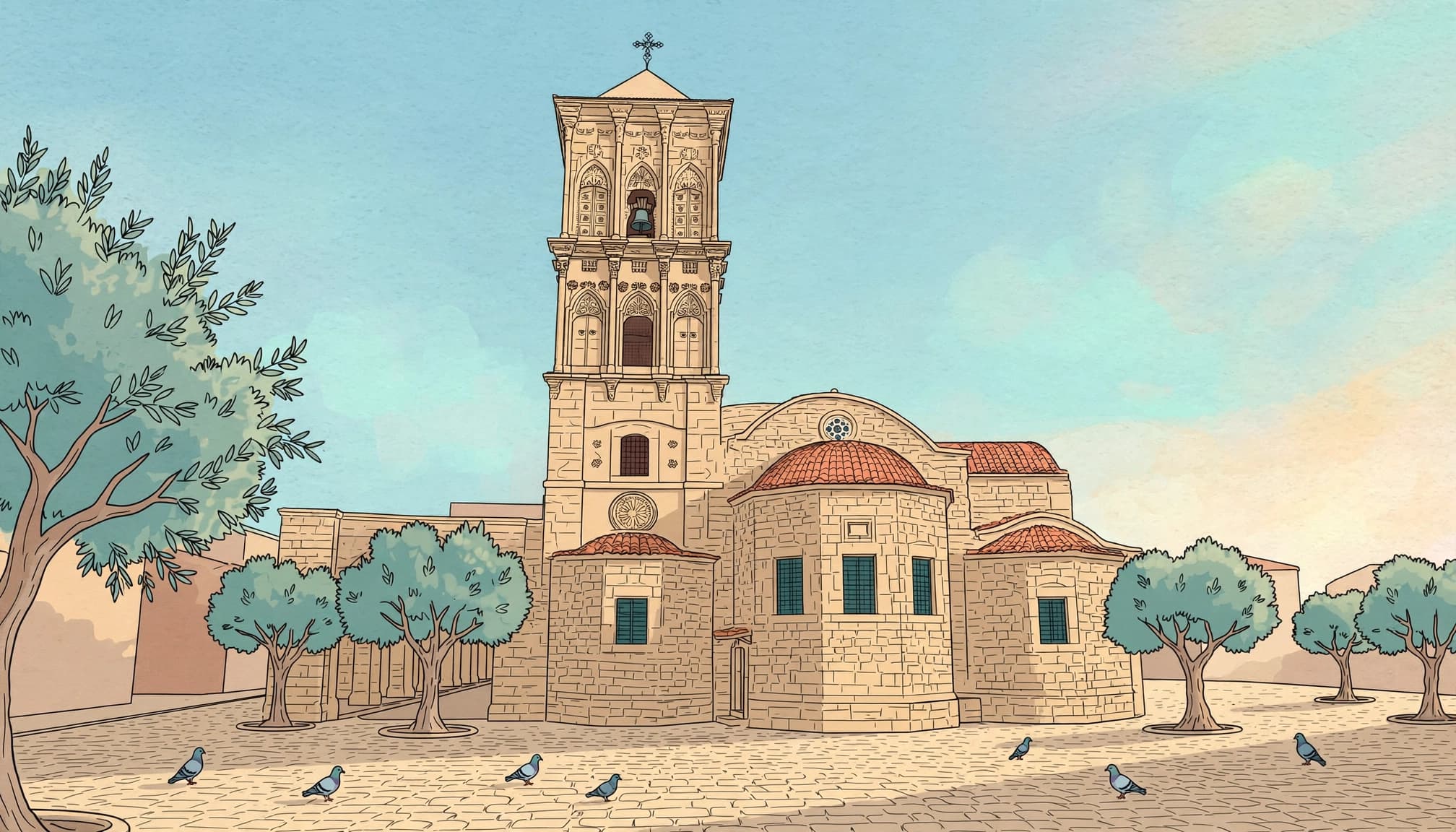
The Church of Saint Lazarus is a ninth-century Byzantine church and the city’s defining landmark. Its robust stone exterior feels almost fortress-like, although that’s an impression rather than a statement of its original purpose. Inside, ornate Orthodox icons surround a crypt linked by tradition to Lazarus’ tomb.
Dress modestly and keep your voice low inside. The square outside is also a good place to pause with a coffee before exploring the lanes behind the church.
A concise Larnaca city guide offers extra context on the church and nearby attractions.
Walk south to Larnaca Fort
At the southern end of Finikoudes Promenade, Larnaca Fort faces the sea. Earlier defences stood here, while Ottoman rebuilding shaped much of the structure you see today.
The small medieval museum inside Larnaca Fort is worth a look if you enjoy local history. Check current opening arrangements before visiting. The setting remains the bigger draw.
After visiting Larnaca Fort, continue into the old Turkish quarter. This area has workshops, modest houses and side streets that feel calmer than the beachfront. Go in daylight, when the details are easier to spot.
Choose between Finikoudes and Mackenzie Beach
Larnaca’s two main beaches have different moods. Both are easy to reach and have facilities nearby, though seasonal services and the current status of Blue Flag beaches are worth checking before travelling.
Finikoudes is best for central convenience
Finikoudes Beach runs alongside the palm-lined Finikoudes Promenade in the heart of town. It’s the practical choice if you want a swim between sightseeing, are travelling with children, or are staying near the centre.
The water is usually calmer close to shore than on exposed beaches elsewhere on the island. Promenade access is convenient, though visitors needing step-free facilities should check current arrangements. Lifeguards, toilets, showers and sunbeds are seasonal. Shade is limited, and the busy road behind it can be noisy, although lunch is a short walk away.
Mackenzie has more space and sunset atmosphere
Mackenzie Beach lies south of the centre, near Larnaca Airport. Its broad sandy beach feels more spacious, with shallow entry for families and a relaxed local-evening atmosphere. Seasonal lifeguards, showers and sunbeds are usually available, but shade and step-free access can vary. Plane enthusiasts enjoy aircraft passing overhead on their approach.
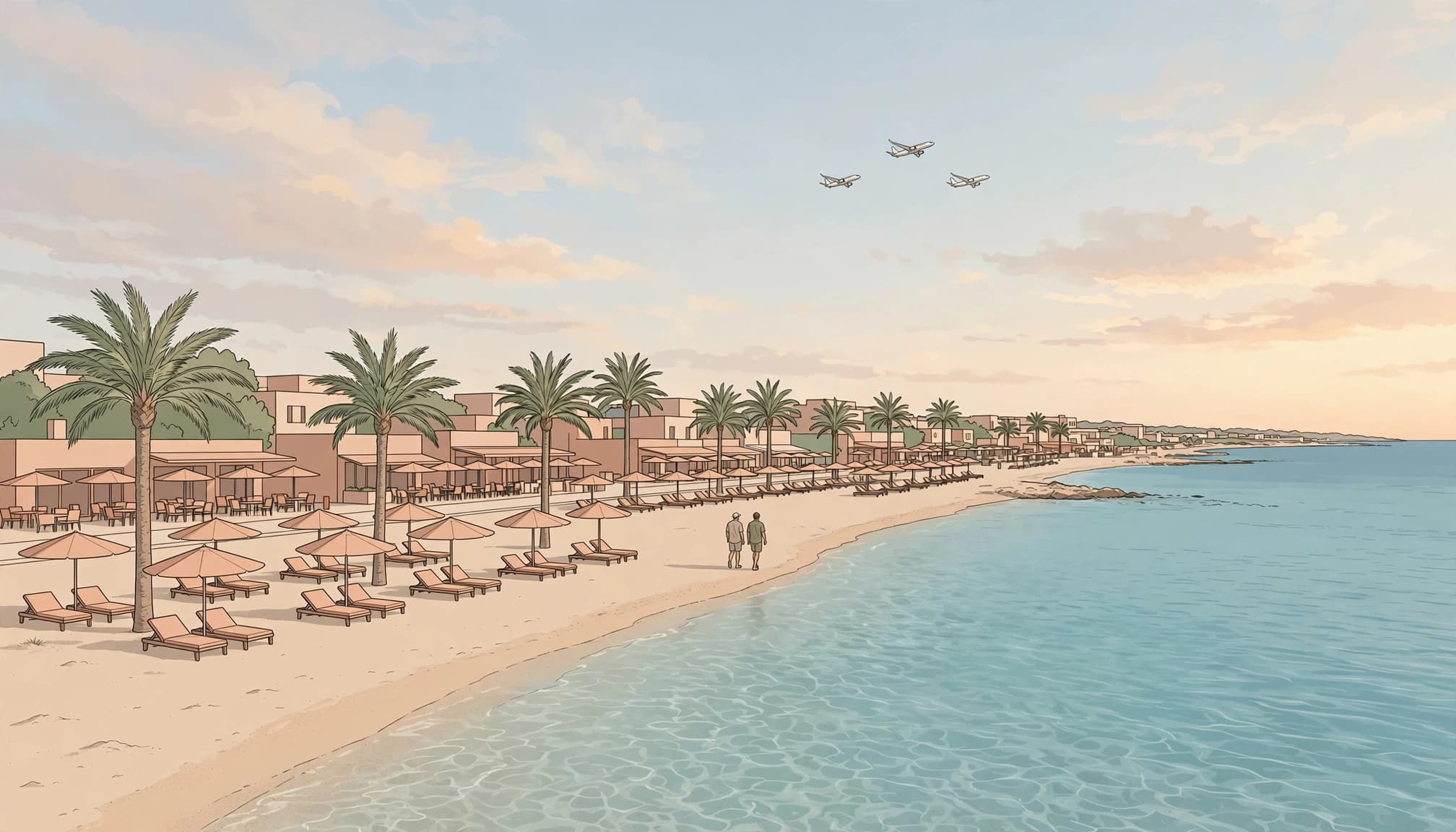
Go late afternoon, swim, then stay for dinner by the water. Check official beach-safety advice before swimming outside lifeguarded hours. For walkers and cyclists, Larnaca route ideas on Komoot can help you link the promenade, beach and city sights.
Eat beyond the promenade restaurants
Finikoudes is convenient, but it isn’t the whole food scene. For better value and a more Cypriot rhythm, walk inland around Saint Lazarus Square and the side streets towards Ermou. There, local taverns and independent local restaurants often have short menus. Look for tables full of local families and dishes that change with the day’s ingredients.
A proper taverna meal rarely needs a complicated order. Portions can be generous, so start with a few small plates. Add one substantial dish between two people if you don’t want to overdo it.
- Order sheftalia, small grilled parcels of seasoned pork and lamb wrapped in caul fat, with pita and salad.
- Try kleftiko, slow-cooked lamb, when it’s listed as a house speciality.
- Choose grilled sea bream, sea bass or calamari near the coast, and ask for the price before cooking whenever fish is charged by weight.
- Look for louvi, black-eyed beans often served with greens, lemon and olive oil.
Take meze seriously
A Cypriot meze usually arrives in stages, not as a starter platter. Menus and portions vary by taverna, but dishes may move from dips and salads to vegetables, grilled cheese, meat or fish. I suggest ordering it only when you have time and a genuine appetite.
For a quick lunch, a bakery can be more sensible, especially if you’re getting takeaway before the lunchtime rush. Ask which pies are vegetarian, then buy a warm cheese pie, olive bread or a sesame-coated koulouri. Eat by the sea with Cyprus coffee and a glass of cold water, a good mid-morning pause.
Visit Hala Sultan Tekke and Larnaca Salt Lake
The salt lake sits a short distance from the centre, yet it changes the pace of a Larnaca stay. In dry months, it may look pale and empty. After winter rain, it becomes a broad mirror for the sky and a habitat for migratory birds.
Look for flamingos in winter
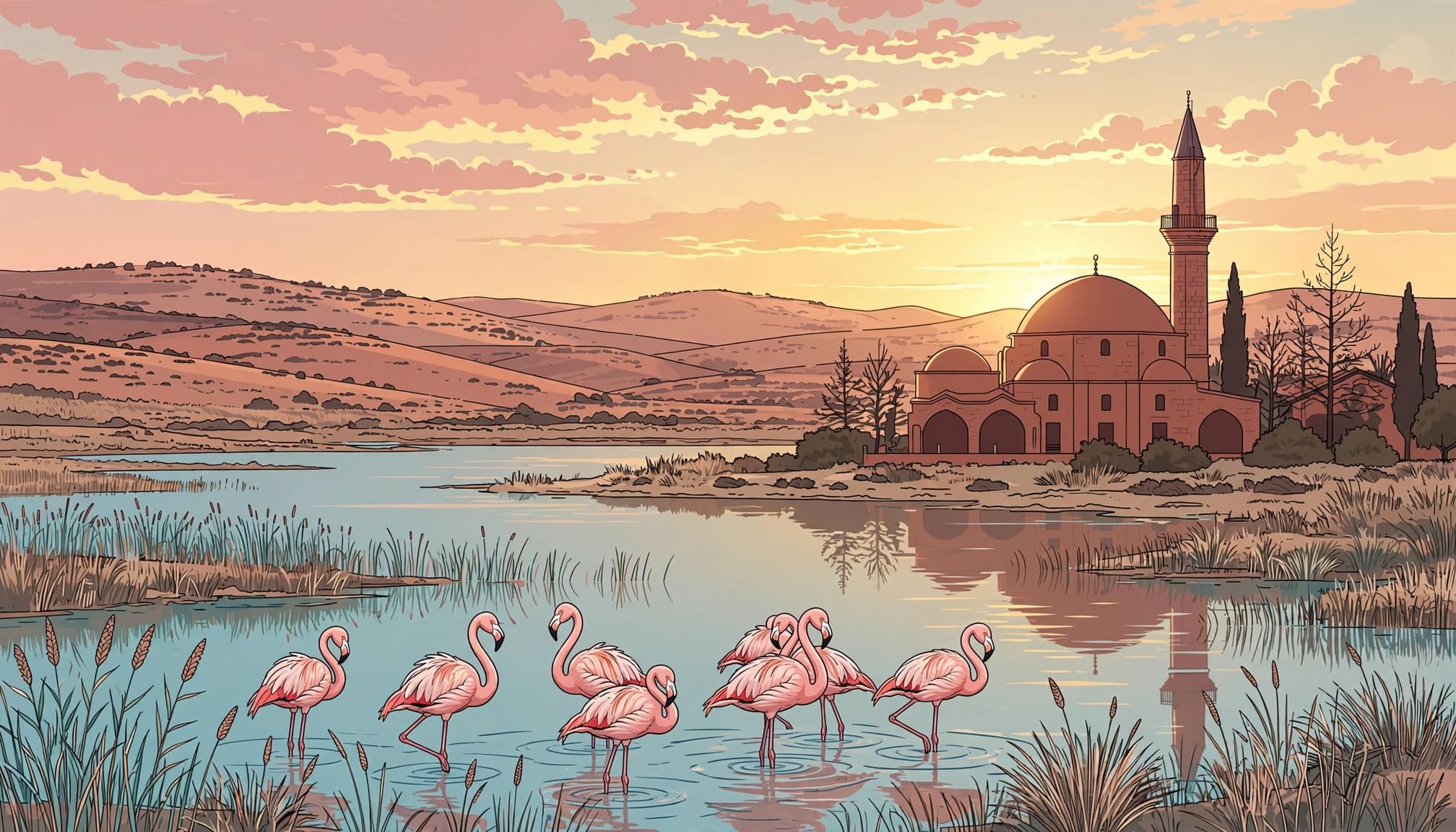
Flamingos often arrive in winter, but numbers, visibility and water levels vary with rainfall. Bring binoculars, stay quiet and keep a respectful distance from the birds.
The best views often come from roads and paths around the lake, rather than from one marked viewpoint. Walking can be exposed in hot weather, so carry water and sun protection. Sunset can improve the light, although birds may be distant or hidden.
Respect the mosque’s setting
Hala Sultan Tekke stands on the lake shore and remains an important Muslim place of pilgrimage. Cover your shoulders and knees, remove shoes where required, and be sensitive around prayer times.
Visiting arrangements can change, so check current details with an official tourism, religious or heritage source before setting out. If you prefer transport and commentary, compare Larnaca Salt Lake excursions with travelling independently, but don’t rely on the commercial listing for opening times or access.
Understand what makes the Zenobia special
The Zenobia shipwreck is one of Cyprus’s best-known wreck dives. The Swedish roll-on, roll-off ferry sank in Larnaca Bay on 7 June 1980, carrying lorries and cargo that remain part of the underwater scene.
The Zenobia shipwreck’s scale is the main draw. Its immense hull and vehicle decks descend to about 42 metres offshore, where visibility and currents can vary, with marine life around the wreck.
Book it as a proper boat dive
Zenobia isn’t a snorkelling trip or casual shore dive. Unlike many easier diving sites, it demands boat access, suitable certification and appropriate experience from scuba divers.
Penetration dives are for suitably qualified advanced divers, as overhead spaces, silt and entanglement add risks; PADI’s training guidance can help assess your preparation. Before paying a deposit, ask a licensed local operator about depth limits, visibility, currents, equipment, certification and weather cancellation policies.
If diving is new to you, choose a pool or shore-based introduction instead. The Zenobia shipwreck can remain a reason to return once you’re suitably trained, as an introductory dive offers a different experience.
Take a day trip into older Cyprus
Larnaca is a useful base for inland day trips, but public transport becomes less convenient beyond the city. A hire car gives the most flexibility, while organised tours remove the need to drive.
See prehistoric life at Choirokoitia
Around 30 kilometres west of Larnaca, Choirokoitia is a UNESCO-listed Neolithic settlement. Stone foundations show where circular houses once stood, and reconstructed dwellings help you picture domestic life thousands of years ago.
Visit early, because the hillside has little shade and uneven paths. Sturdy footwear is more useful than sandals, especially after rain. Some sections may be difficult for visitors with limited mobility, so check the official UNESCO World Heritage entry and Cyprus Department of Antiquities information before travelling.
Buy lace or silver in Pano Lefkara
Pano Lefkara is a hill village associated with traditional lace and fine silverwork. Its sloping lanes, shuttered houses and workshop windows make a pleasant contrast to the coast.
Look for handmade pieces rather than mass-produced souvenirs, checking the stitching and asking about the maker, materials and time involved. Good lace takes time, so prices reflect the work involved. We also recommend allowing time for coffee in the square instead of treating the village as a quick retail stop.
Stavrovouni Monastery offers another inland option, but verify dress rules, opening access and driving time before committing. Routes towards the Troodos Mountains need a weather check, particularly outside summer.
Some heritage day tours combine several places. If you prefer a guided itinerary, browse Larnaca heritage tour options carefully and check how long each stop actually lasts.
Get around Larnaca without wasting holiday time
Most central sights are walkable, and public transport covers longer journeys. Finikoudes, Saint Lazarus Church and the fort sit close together, while Mackenzie Beach needs a longer walk, taxi, bike or local bus.
Larnaca International Airport buses include routes 425, 429, 430, 431, 432 and 407. Route 430 is commonly used for the airport-to-city journey, but check the official Cyprus Public Transport timetable before landing.
Fares, stops and last services can change. Confirm the current fare and timetable through Cyprus Public Transport or by calling 1416, especially if you arrive late.
Decide when a hire car is worth it
For a city break, skip the car. Parking near Finikoudes can be awkward, and you won’t need wheels for the centre.
Hire one for Choirokoitia, Lefkara, mountain villages or several beaches outside town. Cyprus drives on the left, which will feel familiar to UK licence holders.
Before collecting the car, check that your licence is accepted, review the insurance excess and confirm child-seat availability and the fuel policy. Photograph any existing damage before leaving the car park, and check current driving rules with an official Cyprus source or your rental company. These are planning considerations, not legal advice.
A useful overview of sights and local transport can help when you are plotting the lake, aqueduct and old centre on the same day.
Keep planning your Cyprus holiday
Continue planning your trip with these related guides:
- Calm-water swimming in Larnaca family beaches, plus the best things to do in Larnaca on a first visit.
- Nearby day trips: the Salt Lake and Hala Sultan Tekke and Lefkara village.
- Flying in: see Larnaca vs Paphos airport.
- Where to stay in Larnaca, with advice on Finikoudes, Mackenzie and the old town.
- Cypriot food to try on holiday, including useful taverna ordering tips.
- Choirokoitia and Pano Lefkara day trip guide, for a fuller inland itinerary.
- Driving in Cyprus for UK visitors, with car hire guidance and road advice.
Frequently Asked Questions
How many nights should you spend in Larnaca?
Three nights gives you time for the old centre, both main beaches, the salt lake and a relaxed meal or two. Two full days can work if Larnaca is part of a longer Cyprus holiday.
What is the best time to visit Larnaca?
September is especially pleasant, with warm sea temperatures and more comfortable evenings after the busiest summer period. April, May and October also suit visitors who want beach weather without the full heat of July and August.
Which beach is better in Larnaca: Finikoudes or Mackenzie?
Finikoudes is best for central convenience, with the promenade, shops and restaurants close by. Mackenzie offers more space, a relaxed sunset atmosphere and the chance to watch planes approaching the nearby airport.
Can you get around Larnaca without a car?
Yes, most central sights are walkable and local buses connect the airport and longer coastal journeys. A hire car becomes more useful for Choirokoitia, Pano Lefkara, mountain villages and beaches outside the city.
When can you see flamingos at Larnaca Salt Lake?
Flamingos often arrive during winter, although numbers and visibility depend on rainfall and water levels. Bring binoculars, keep your distance and check current conditions before setting out.
Make your first Larnaca stay count
Larnaca gives you an easy introduction to Cyprus because its beaches, old centre and salt lake sit close together. Leave room for slow meals and unplanned walks, which often become my favourite parts of a stay.
Use this Larnaca travel guide to build a simple base, then choose one or two experiences that suit your pace. I’d pair a visit to Kition, an ancient city, with Saint Lazarus, a Byzantine church. Then I’d leave time for an afternoon swim and dinner by the water. Check opening hours, bus timetables and seasonal wildlife details separately, as these can change.