Cyprus gives you a beach break, ancient ruins and mountain villages within a manageable first trip. A Cyprus holiday from UK airports is easy to arrange, but the island feels far more rewarding when you choose the right base and leave room to wander.
For most first-time visitors, we recommend flying into Larnaca or Paphos, staying in one area, then adding a few well-chosen day trips. That approach keeps the holiday relaxed, even if you only have a week.
Start with the practical decisions, because they shape every later booking.
Planning a Cyprus holiday from UK airports
Direct flights from the UK land mainly at Larnaca Airport and Paphos Airport. Larnaca suits the east coast, Limassol and Nicosia. Paphos is the better arrival point for western beaches, archaeological sites, Polis and the Akamas area.
Summer routes run from London and several regional airports, although flight days change by season. For 2026, Jet2 added a Gatwick to Paphos service from 30 March, with twice-weekly Monday and Thursday flights from May. Always check your own dates before booking, as schedules change around school holidays.
Booking a Cyprus holiday from UK airports works well as either a package or an independent trip. Packages can make sense if you want an airport transfer, a beach hotel and a fixed price. Independent booking gives you more choice in village stays, boutique hotels and car hire.
Check passports and entry rules first
British citizens can visit Cyprus without a visa for short tourist stays of up to 90 days. However, passport rules can catch out travellers with older documents.
Your passport needs to be issued less than 10 years before your arrival date, valid for at least three months after you plan to leave Cyprus, and have a blank page. Before booking non-refundable flights, check the latest Cyprus entry requirements from the FCDO.
Border officials can ask for evidence of a return or onward ticket, accommodation and enough money for your stay. Keep digital copies of these details on your phone, but carry printed copies if you prefer a backup.
Pick the season that matches your plans
Cyprus has long, dry summers and mild winters. July and August suit people who want uninterrupted beach weather, yet inland temperatures can become intense. If you dislike heat, avoid planning long archaeological walks at midday.
| Travel period | What it feels like | Best for |
|---|---|---|
| April and May | Warm days, greener hillsides and cooler evenings | Sightseeing, walking and mixed beach days |
| June to August | Hot, sunny and busy around resort beaches | Swimming, water sports and family holidays |
| September and October | Warm sea, softer light and fewer crowds | Couples, beach time and road trips |
| November to March | Mild coast, cooler mountains and occasional rain | Culture, food, city breaks and hiking |
We find late April, May, late September and October offer the easiest balance for a first visit. The sea is warmest after summer, while spring is better for wildflowers and walks.
For a straightforward stay in the Republic of Cyprus, book flights to Larnaca or Paphos. Do not treat Ercan Airport in the north as an equivalent arrival point.
Choose the Cyprus region that fits your holiday
Cyprus is compact on a map, although its roads and terrain can stretch a short journey. Choose a base around the holiday you want, rather than trying to see every corner in seven days.

Paphos works brilliantly for first-time visitors who want a varied week. You can combine Roman mosaics, harbour restaurants, coastal walks and easy drives towards the Akamas Peninsula. The resort areas around Kato Paphos are convenient, while the old town has a more local feel.
Larnaca is a quieter choice with a palm-lined seafront, an old Turkish quarter, salt lake and a central position. It suits couples and short breaks, especially if you want to avoid a large resort atmosphere.
Limassol has Cyprus’s most urban energy. Its old town, marina, restaurants and wine villages nearby create a good balance for people who want city evenings alongside a beach hotel.
| Base | Choose it for | Best nearby experiences |
|---|---|---|
| Paphos | History, coastal scenery and a slower pace | Tombs of the Kings, mosaics, Polis and Akamas |
| Larnaca | A relaxed town base and easy road links | Finikoudes, salt lake, Lefkara and Nicosia |
| Limassol | Dining, nightlife and central access | Kourion, wine villages and the Troodos foothills |
| Protaras | Clear water and a quieter east-coast beach stay | Fig Tree Bay, Cape Greco and boat trips |
| Ayia Napa | Beach clubs, nightlife and family resorts | Nissi Beach, water sports and sea caves |
Protaras is the strongest choice for turquoise water and an easy beach holiday. Ayia Napa is close by, but it has a livelier atmosphere, especially in peak season. Families often prefer the calmer bays around Protaras.
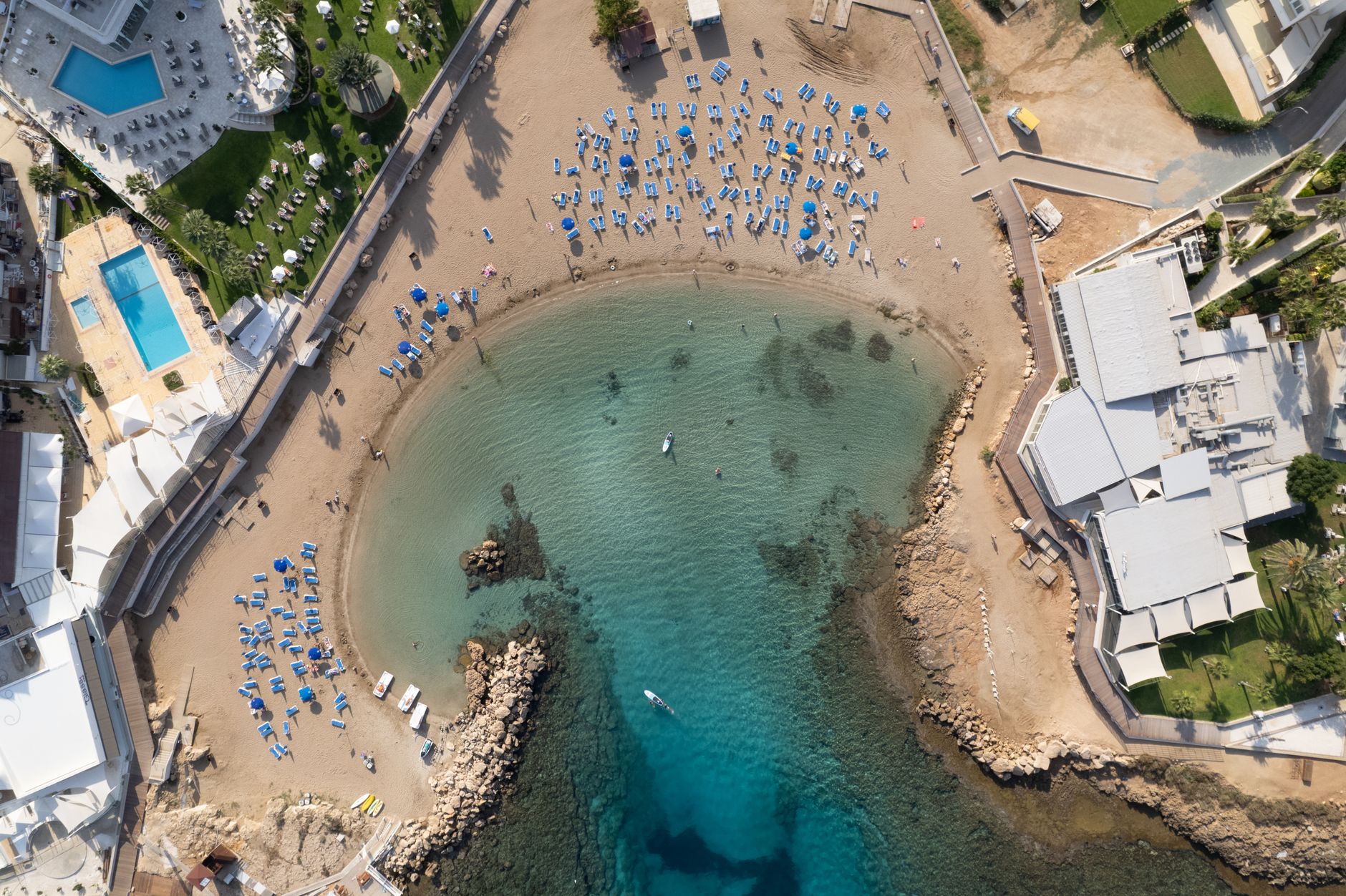
Photo by Ollie Craig
The Troodos Mountains deserve at least a day if you enjoy scenery, village cafés and cooler air. Stay there for two nights if walking, wine and traditional food matter more than pool time.
Build a first-week itinerary with breathing space
A first Cyprus trip doesn’t need a packed timetable. The island is full of places that reward a slower visit, including family-run tavernas, hill villages and small beaches you spot while driving.
For a seven-night holiday, settle into your resort on day one. Use the next day for the closest beach or old town, when you are still getting your bearings. Plan one major historic site, one full-day scenic drive and one completely unplanned day.
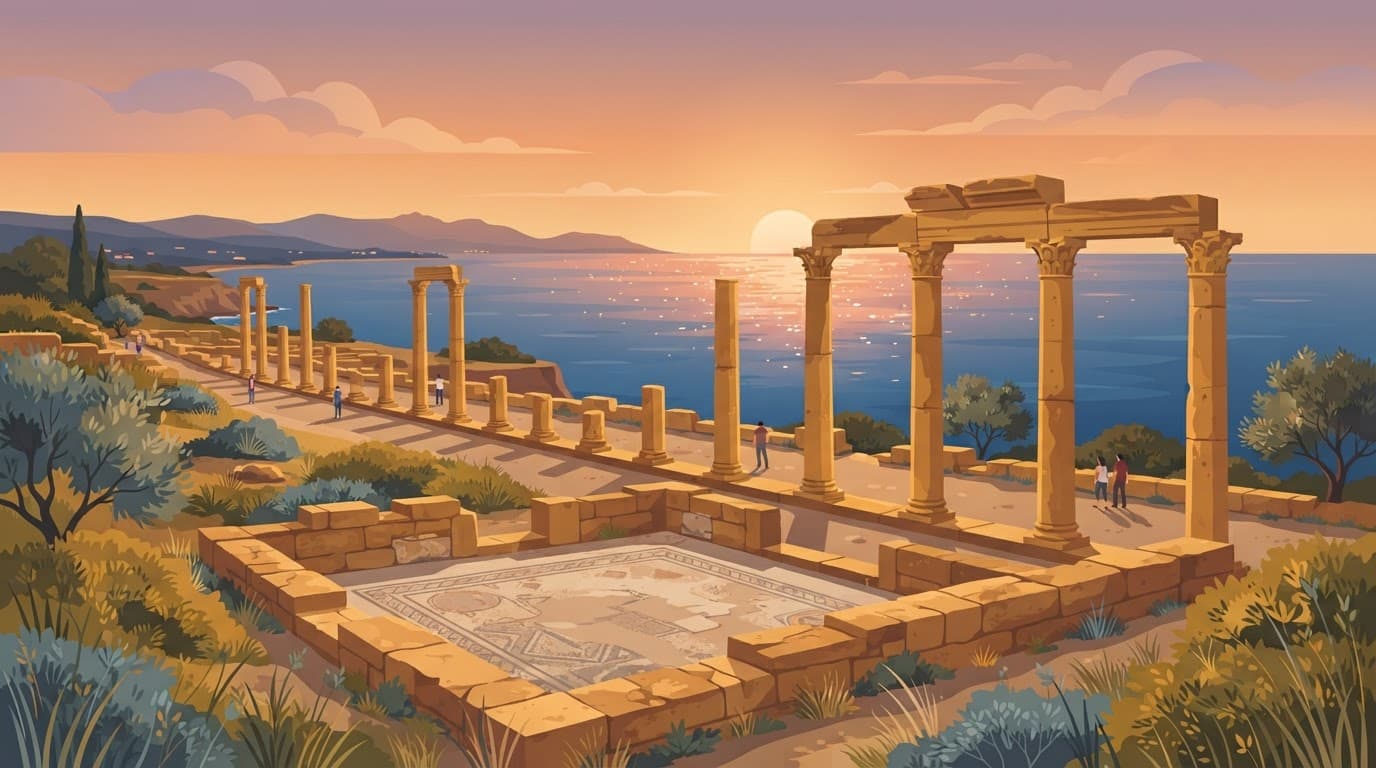
Paphos makes this especially easy. Visit the mosaics at Paphos Archaeological Park in the morning, then walk around the harbour once the heat eases. The Tombs of the Kings is nearby, but the exposed site is best early or late in the day.
Further east, the Greco-Roman ruins of Kourion sit above the sea near Limassol. The theatre and mosaics are memorable, and the view alone makes the drive worthwhile. Choirokoitia, a Neolithic settlement between Larnaca and Limassol, offers a different window into the island’s past.
Keep beach days realistic
A beach day can take more time than expected in July and August. Arrive early for shade and calmer water, then take a proper lunch break away from the sun. Go back later for a swim when the temperature drops.
Cape Greco National Forest Park, between Protaras and Ayia Napa, is ideal for a half-day of sea caves, viewpoint walks and swimming. Bring water shoes if you plan to enter from rocky edges rather than a sandy bay.
On the west coast, Lara Beach and parts of the Akamas region are less developed. The roads can be rough, so check whether your hire agreement permits the route. We would not plan a remote beach day without water, snacks and a charged phone.
Treat Nicosia as a city day, not a rushed stop
Nicosia is Cyprus’s capital and its only divided city. The old town has narrow lanes, museums, independent shops and the Venetian walls. It feels very different from the coast.
You can cross the Green Line at designated points, subject to current rules and carrying your passport. Allow time for the crossing, and do not cram Nicosia into the same day as a beach excursion.
Choose accommodation and set a sensible budget
Your accommodation changes the rhythm of the trip. A large beachfront hotel suits pool days and easy evenings. A small guesthouse in a village puts you closer to local bakeries, tavernas and early morning quiet.
In Paphos, Kato Paphos is practical for first visits because restaurants, the harbour and archaeological sites are close. The old town works if you prefer local cafés and do not mind travelling to the sea. Around Protaras, check the walking distance to your chosen beach, because a sea view does not always mean direct access.
Villas are popular for families and groups. Still, they often need a car, especially outside the main resorts. If you want a car-free holiday, book near a promenade or frequent bus route and arrange airport transfers before arrival.
The Republic of Cyprus uses the euro. Cards are widely accepted in resorts, towns and larger restaurants, but carry some cash for village cafés, tips and small purchases. If a card terminal offers to charge you in pounds, choose euros to avoid poor exchange rates.
Recent flight searches have shown return fares as low as £58 to Paphos and around £94 on the Birmingham to Larnaca route. Those fares are snapshots, not a reliable holiday budget. School breaks, checked luggage, seat selection, airport parking and transfers can quickly change the total.
We compare the total trip cost, not the headline flight price. A cheaper flight arriving late at night may require an expensive taxi. Equally, a hotel with breakfast can save money if you are travelling with children or staying in a resort area.
Drive safely and use transport where it helps
Cyprus drives on the left, which makes the adjustment easier for UK visitors. However, the first roundabout can still feel unfamiliar because traffic joins from the opposite direction to mainland Europe.
A hire car gives you freedom for wine villages, mountain roads and quieter beaches. Book one with decent insurance cover, inspect it carefully before leaving the airport and photograph existing marks. Ask about fuel rules, excess charges and whether the agreement allows travel across the Green Line.
Mountain roads need patience. A route that looks short can take far longer than expected, particularly around the Troodos villages. Avoid rushing back after dark if you are not used to narrow bends.
Public buses are useful for straightforward coastal journeys, including routes between resort centres and main towns. They are less practical for remote beaches and mountain stops. Taxis work well for a restaurant evening or airport run, but agree the fare before setting off when there is no meter.
Before departure, read the current FCDO travel advice for Cyprus. It covers safety, local laws, driving and issues that can affect travel plans.
Eat beyond the hotel buffet
Cypriot food is generous, seasonal and made for sharing. A proper meze is a long meal of small dishes that may include dips, grilled vegetables, halloumi, sausages, seafood, potatoes and slow-cooked meat. Go hungry and allow time.
Order fish meze by the coast, particularly if the restaurant tells you what arrived that morning. In mountain villages, look for dishes such as kleftiko, koupepia and oven-baked potatoes. For a quick lunch, a souvlaki or halloumi pita is often enough.
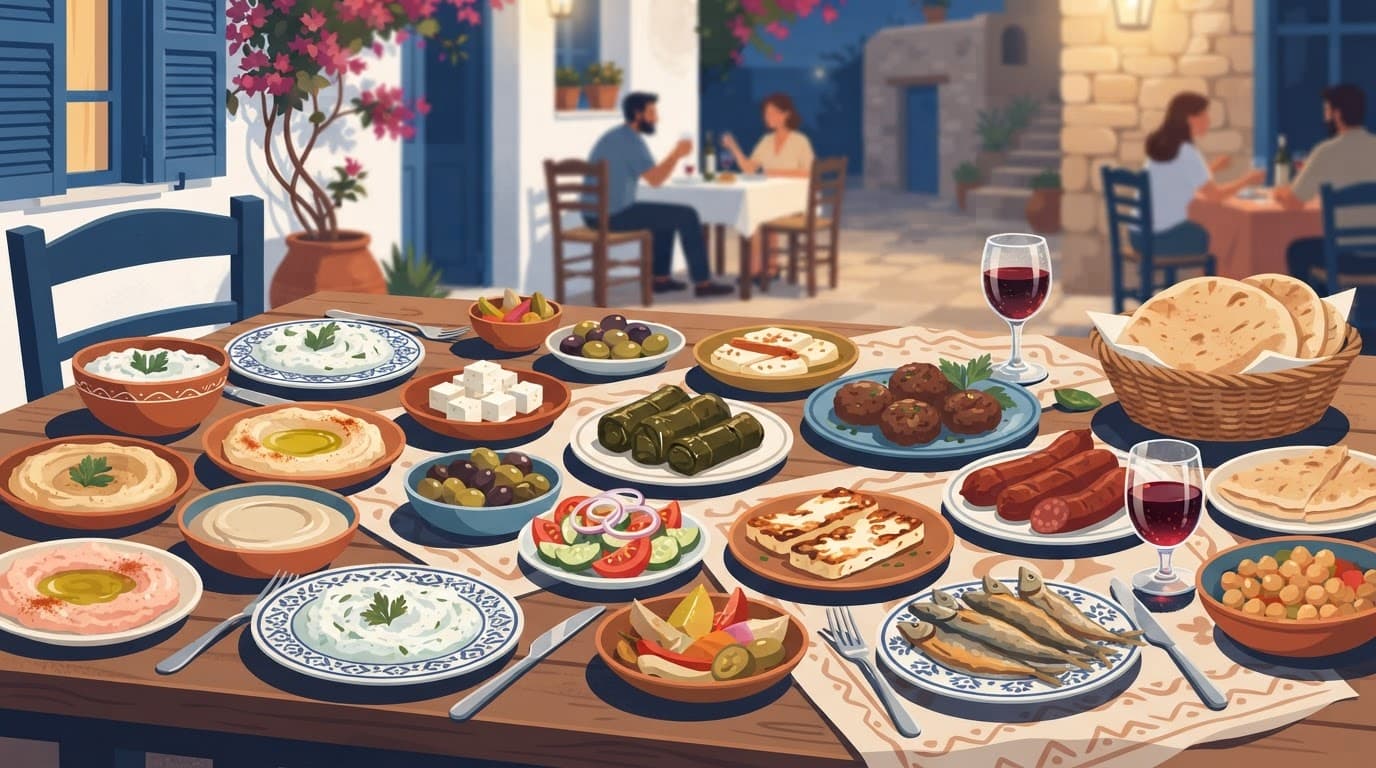
Cyprus also has a strong wine tradition. Try crisp Xynisteri with seafood, fuller Maratheftiko with grilled meat and sweet Commandaria after dinner. In wine villages, ask what local producers the taverna pours by the glass.
We recommend keeping at least two evenings free of reservations. The best meal of the holiday may be the place you notice after a late-afternoon swim.
Book in an order that prevents expensive changes
Flights are tempting to book first, but check the bigger picture before you press pay. A simple order helps you avoid an awkward arrival time, unsuitable resort or costly transfer.
- Check passport validity, entry rules and travel insurance before committing to dates.
- Choose the season based on heat, school holidays and the sort of holiday you want.
- Compare flights into both Larnaca and Paphos, including bags, seat fees and airport transfer costs.
- Pick one main base, then reserve accommodation with a cancellation policy you understand.
- Book a hire car early if you plan to explore outside resort areas.
- Mark a few fixed plans, such as a boat trip or archaeological site, but keep other days open.
- Pack a sun hat, refillable bottle, high-factor sun cream, comfortable sandals and one light layer for evenings.
A Cyprus holiday from UK airports can be easy to organise, yet the thoughtful choices are the ones you feel once you arrive. The right base, an unhurried itinerary and a little local food planning make a bigger difference than squeezing in another excursion.
Keep planning with Cyprus Travel Hub
Continue your trip research with these related Cyprus Travel Hub guides:
- Where to stay in Paphos for beaches, history and restaurants
- The best Protaras beaches for clear water and calmer swims
- Driving in Cyprus: car hire, mountain roads and local rules
- Troodos Mountains day trips, villages and wine routes
- Cypriot food to try beyond halloumi and souvlaki
A confident first Cyprus holiday
The strongest first visit balances one dependable base with a few memorable detours. Give yourself time for the coast, a historic site, a village meal and a slower afternoon.
A Cyprus holiday from UK airports becomes far easier when flights, documents and transport are settled before departure. Once those details are in place, the island has plenty of room for discovery.
Pingback: Cyprus in July: Weather and Sea Temperature Guide
Pingback: Paphos Airport Transfers: Bus, Taxi and Car Hire Options
Pingback: Cyprus Entry Requirements for UK Travellers (2026 Guide)