When we book Cyprus history walking tours, we’re doing more than filling a spare afternoon. We’re choosing the easiest way to understand an island shaped by Greeks, Romans, Byzantines — explored fully in our Cyprus heritage travel guide, Venetians, Ottomans and the British.
If we want the short answer early: Nicosia is the best all-round history walk, Paphos is best for ancient ruins, and Larnaca and Limassol work well as shorter add-ons.
Which Cyprus cities work best for history on foot?
| City | Best for | What we see | Best fit |
|---|---|---|---|
| Nicosia | Layered history | Venetian walls, old lanes, museums, the divided city | First-time visitors |
| Paphos | Ancient Cyprus | Roman villas, mosaics, tombs, harbour area | Classical history fans |
| Larnaca | Compact old town | St Lazarus area, older streets, seafront context | Short city breaks |
| Limassol | Medieval and trading history | Castle, old port, market streets | Mixed modern and historic day out |
If we only have time for one city, Nicosia gives the clearest sense of Cyprus as a whole. Within a few streets, we move from medieval walls to Ottoman traces — combine with a visit to our picks in the Cyprus history museums guide, colonial buildings and the present-day border. For official ideas, the Nicosia guided tours page and the old Lefkosia and its walls route both show why the capital usually sits at the top of the list.
If we only book one history walk in Cyprus, Nicosia gives the fullest picture.
Why Nicosia is the stand-out choice
Nicosia makes sense on foot because the city still feels stitched together by its past. The circular Venetian walls frame the old quarter, and the streets inside them are compact enough to walk without rushing. As we move through the walled city, the atmosphere changes block by block — one lane feels café-filled and polished, the next holds workshops, faded stone and shutters. That contrast shows history as something still lived in, not sealed behind glass.
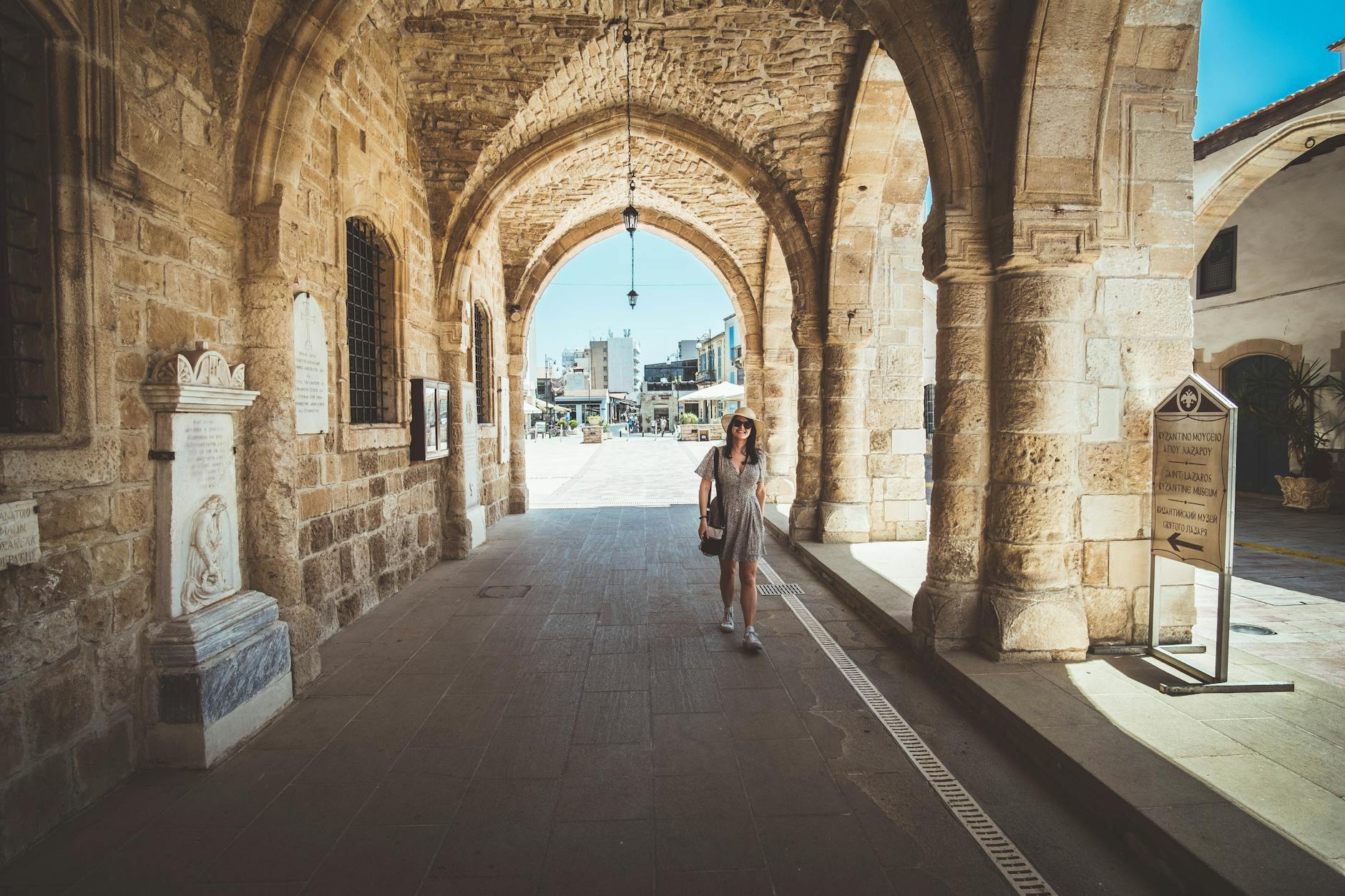
Photo by Jo Kassis
The strongest routes usually include Eleftheria Square, Laiki Geitonia, sections of the walls and streets leading towards the Ledra Street checkpoint. Some tours also bring in the Leventis Municipal Museum, which helps us place the city in a longer timeline. For a privately guided option, the Nicosia Old Town walking tour is one example of the sort of route available. If we’re staying in Paphos, a Nicosia day walking tour from Paphos removes the transport hassle.
Paphos, Larnaca and Limassol each tell a different story
Paphos for the ancient world
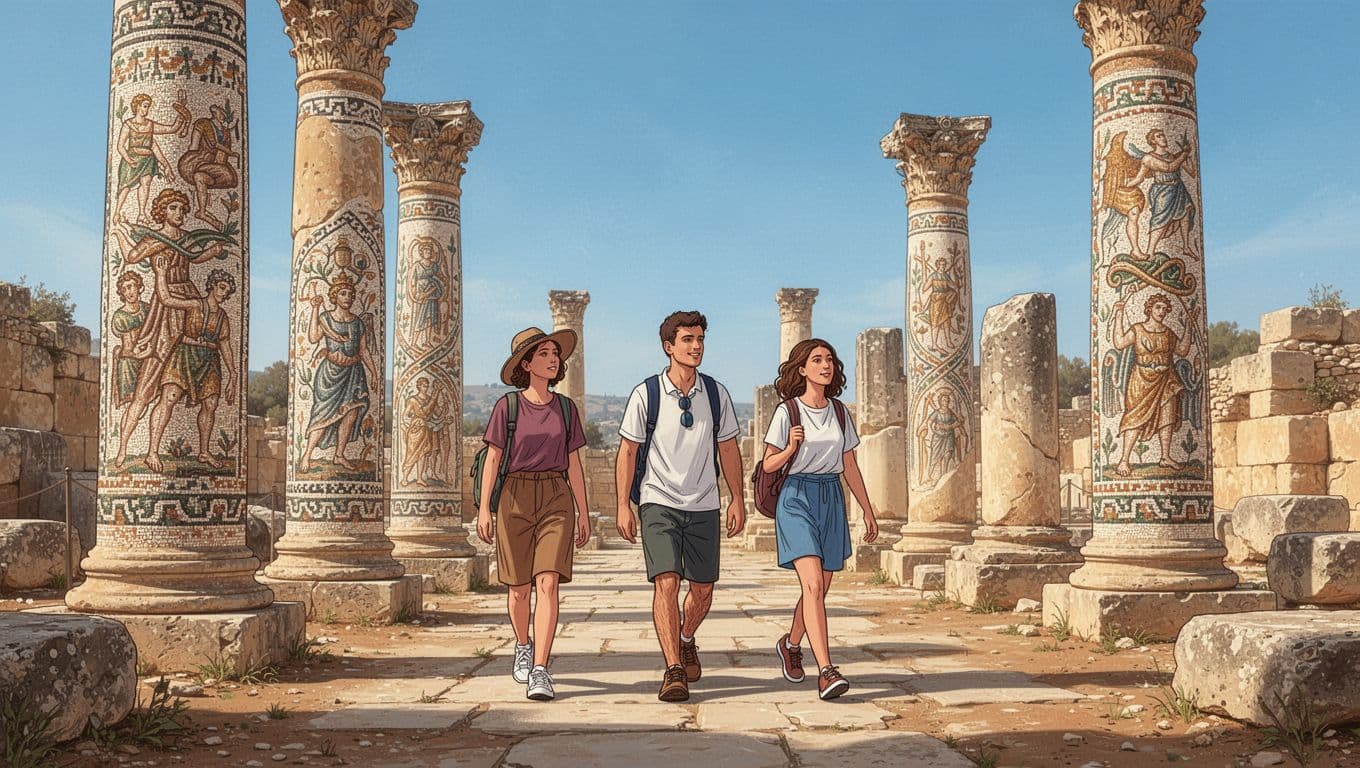
Paphos works when we want ruins with space around them. The archaeology is the main event, and the walking feels more like moving through an outdoor museum than tracing a dense old town. The highlights — Paphos Archaeological Park with its Roman villas and mosaics, and the Tombs of the Kings — are well known for good reason. If our interest leans towards classical history, Paphos often beats every other city on the island.
Larnaca and Limassol as half-day routes
Larnaca doesn’t overwhelm us with layers, which can be a strength. A walk around the Church of St Lazarus and the older streets nearby is manageable in a relaxed morning, easily paired with the seafront. Limassol’s old core is smaller than many first-time visitors expect — the castle area, Castle Square and old port tell a story about trade and defence without demanding a full day. For current tour options across the island, walking tour options across Cyprus gives a useful starting point.
How to choose the right tour for our trip
Match the tour to the kind of history we enjoy. If we like politics, identity and mixed architecture, Nicosia is the strongest pick. If ruins and archaeology pull us in, Paphos is the smarter choice. Check route length and where it starts — old cities look compact on a map, but heat changes the experience fast. In summer, even 2 km can feel heavy after midday. Morning starts are best in warmer months. Wear proper shoes, check whether museum entry is included, and confirm whether the walk crosses the checkpoint area in Nicosia.
Our Take: What a Good Cyprus Walking Tour Actually Delivers
Cyprus becomes clearer when we walk it slowly, and the difference between a self-guided wander and a good guided tour is usually the commentary. The best guides in Nicosia in particular do something that a map cannot — they explain why the city still feels split, what the checkpoints mean in lived experience, and how a street that looks like a quiet backstreet was once a main thoroughfare. That context is what we are really paying for. Our advice is to prioritise a guide with local connections over a big-platform operator, and to book a small group if possible. History told to twelve people feels very different from a coach stop.
Self-guided walking routes: the DIY option
Not all historical walking in Cyprus requires a guide. Several cities and archaeological sites have well-marked self-guided routes that work well for independent travellers. Nicosia's old city has a clear walking route mapped by the local municipality that takes in the Venetian walls, the Green Line, key churches, mosques and the covered market in a circuit of around two hours. The route is easy to follow from a free map available at most hotels in the old city, and it covers the essential stops without requiring a booked tour.
Paphos Archaeological Park is inherently a self-guided experience — the mosaics, the Odeon, the Saranda Kolones castle ruins and the Byzantine fort are all connected by paths with clear signage. Hiring the audio guide at the entrance significantly improves the visit. The Tombs of the Kings nearby has the same model: a site map on entry, clearly numbered tombs, and as much or as little depth as we choose to apply. Both sites work well for visitors who prefer their own pace over a guided group.
Guided tours: when a guide adds real value
A good local guide adds something no audio guide or sign can replicate — a sense of which stories matter, what the site felt like to the people who used it, and where to look when the obvious interpretation misses something. At Kourion, a guide who can place the earthquake of 365 AD in the context of what we are looking at — scattered personal belongings, a family found in the ruins of their home, the theatrical masks frozen mid-performance — turns an impressive ruin into something genuinely affecting.
Nicosia's divided city is another place where a local guide adds disproportionate value. The politics, the community dynamics, and the personal histories behind the buffer zone and the crossing points are difficult to convey through text alone. A guide who has lived through the decades since 1974 and can speak to the human reality of a divided capital gives the tour a dimension that no printed guide can match. For the walking tours of Limassol's Old Town, the value is different — understanding which building was a caravanserai, which courtyard once held a Venetian merchant's house, and how the Ottoman, Greek and British colonial layers sat on top of each other makes the street-level experience far more legible.
Booking tips and what to look for in a tour operator
For guided history tours, group size matters more than most things. A small group of eight or fewer allows the guide to be heard clearly at all times, to stop for questions, and to adapt the route to what the group finds interesting. Large coach-based tours with twenty-plus people lose most of those advantages. Specialist history-focused operators tend to run smaller groups and attract participants who share the interest, which makes the dynamic on the day better for everyone.
Reading recent reviews and checking whether the guide has a relevant academic or professional background — archaeology, history, art history — is worth doing before booking. Many of the best guides in Cyprus hold degrees in relevant disciplines and can answer the kind of follow-up questions that a trained operator from a general tour company often cannot. Booking directly with a specialist or through a reputable local agency rather than through a hotel desk tends to give access to better guides at similar or lower prices.
Frequently Asked Questions About Cyprus History Walking Tours
Which city is best for a history walking tour in Cyprus?
Nicosia is the strongest choice for a layered history walk covering the widest range of periods — from Venetian walls and Ottoman traces to the modern divided city. Paphos is the best pick for ancient Greek and Roman history. Limassol and Larnaca work well for shorter, more casual routes.
Are Cyprus history walking tours suitable for all fitness levels?
Most city walking tours in Cyprus are flat and manageable for most fitness levels. Old town streets can be uneven, so good shoes matter. The main challenge in summer is heat rather than distance. Morning tours or routes in shaded old town areas are much more comfortable than exposed afternoon walks.
How long does a typical history walking tour in Cyprus last?
Most guided city history tours run for two to three hours. Paphos walking routes that include the archaeological park can take half a day or more depending on pace. Self-guided walks in Nicosia or Larnaca old towns can be completed in one to two hours at a relaxed pace.
Can we do a history walking tour in Cyprus without a guide?
Yes — Nicosia and Larnaca old towns are easy to walk independently with a good map or app. Paphos Archaeological Park is also straightforward self-guided with information boards throughout. A guided tour adds context that is hard to replicate alone, especially for understanding the modern political history of Nicosia.
When is the best time of year for history walking tours in Cyprus?
April to June and September to October are the most comfortable months. Temperatures are warm but not extreme, crowds are smaller and outdoor ruins feel more pleasant to explore. July and August are manageable with very early starts but the midday heat at open sites can be punishing.