Cyprus drew me in before I even landed. Four and a half hours from a grey British morning, the coast appears below the plane window looking improbably blue, and the warm air hits the moment the doors open. That combination — short flight, serious sunshine, proper history, and genuinely good food — is why this island keeps pulling UK travellers back. Our Cyprus travel guide for first-timers covers the airport side — check our Larnaca vs Paphos airport guide for UK arrival tips — but this piece covers the practical side and the fun side, so we can stop scrolling and actually plan a trip worth remembering.
What I find refreshing about Cyprus is that it doesn’t make us choose. We can spend Tuesday morning at a Roman mosaic site, eat a meze lunch that lasts two hours, swim at a turquoise bay in the afternoon, and drive up into a pine-covered mountain village covered in our Cyprus history guide the next day. That variety is the point.
The basics help too. Cyprus uses the euro, UK plugs work without an adaptor, and they drive on the left. For a first trip, that’s a lot of friction already removed. Here’s how to make the most of it.
Plan the basics before we book anything
A few simple decisions early on — when to go, which airport to fly into, what our passport needs — shape the whole holiday. Cyprus is genuinely easy for UK travellers, but getting these bits right saves money and avoids stress.
Choose the best time to visit Cyprus
Cyprus gets over 300 sunny days a year, so there’s no bad time to visit — but there are better times depending on what we want. My honest view: April, May, September, and October are the sweet spot. Temperatures sit around 20–26°C, the sea is warm enough to swim in, prices are lower than peak summer, and the island doesn’t feel rammed. Spring also means wildflowers in the Troodos Mountains, which is one of those unexpected bonuses that makes the island feel even richer.
Summer (June to August) can hit 35°C or above, which is brilliant if the plan is sunbeds and long evenings by the sea. For inland sightseeing or walking, it’s punishing. If we’re going in peak summer, we should plan beaches in the morning, rest in the midday heat, and save ruins and villages for late afternoon.
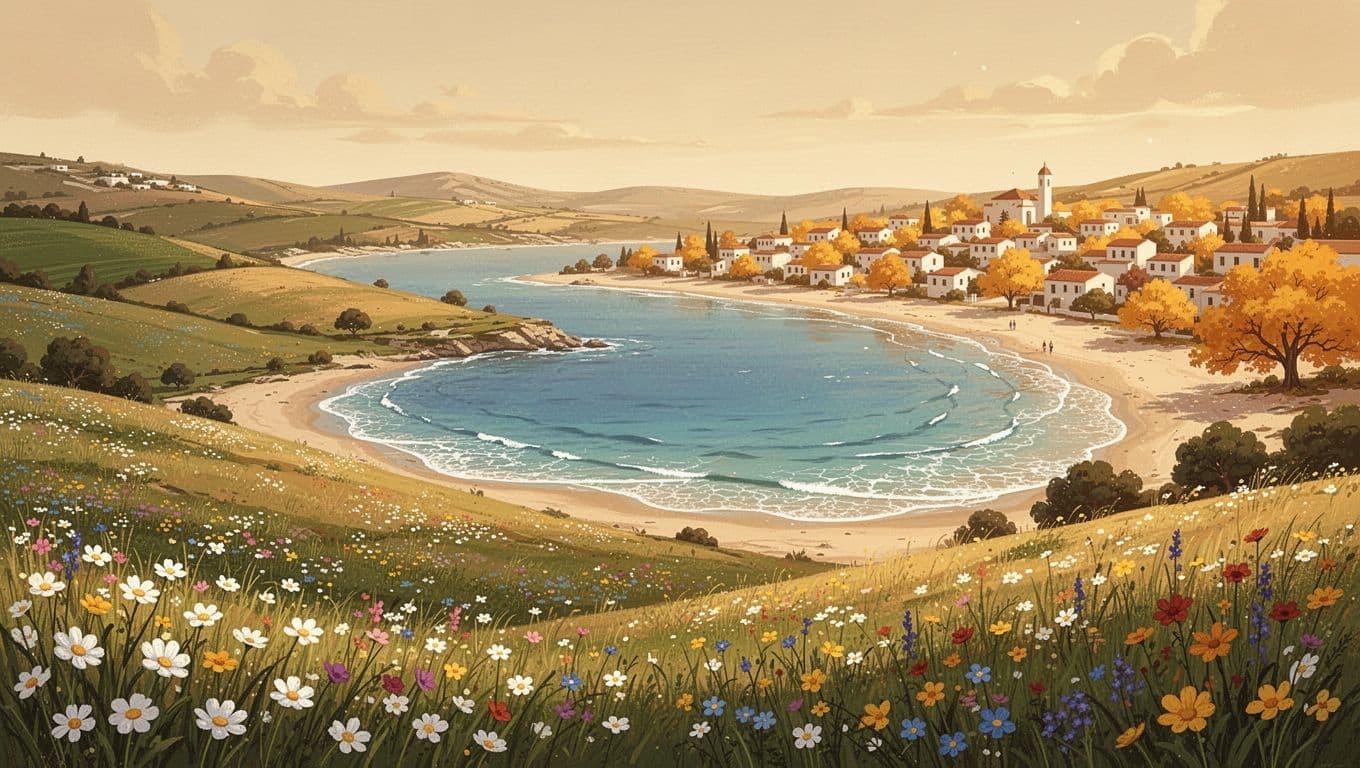
Winter works for people who want walking, food, wine villages, and no crowds — and prices drop noticeably. I wouldn’t pick it for beach days, but it’s underrated for everything else.
Passport and entry requirements for UK travellers
UK citizens can visit Cyprus visa-free for up to 90 days within any 180-day period. The rules to watch are passport-specific: it must be issued within the last 10 years and valid for at least 3 months beyond our departure date. That second condition catches people out — especially anyone who renewed a passport slightly early and has old issue dates bumping up against the limits.
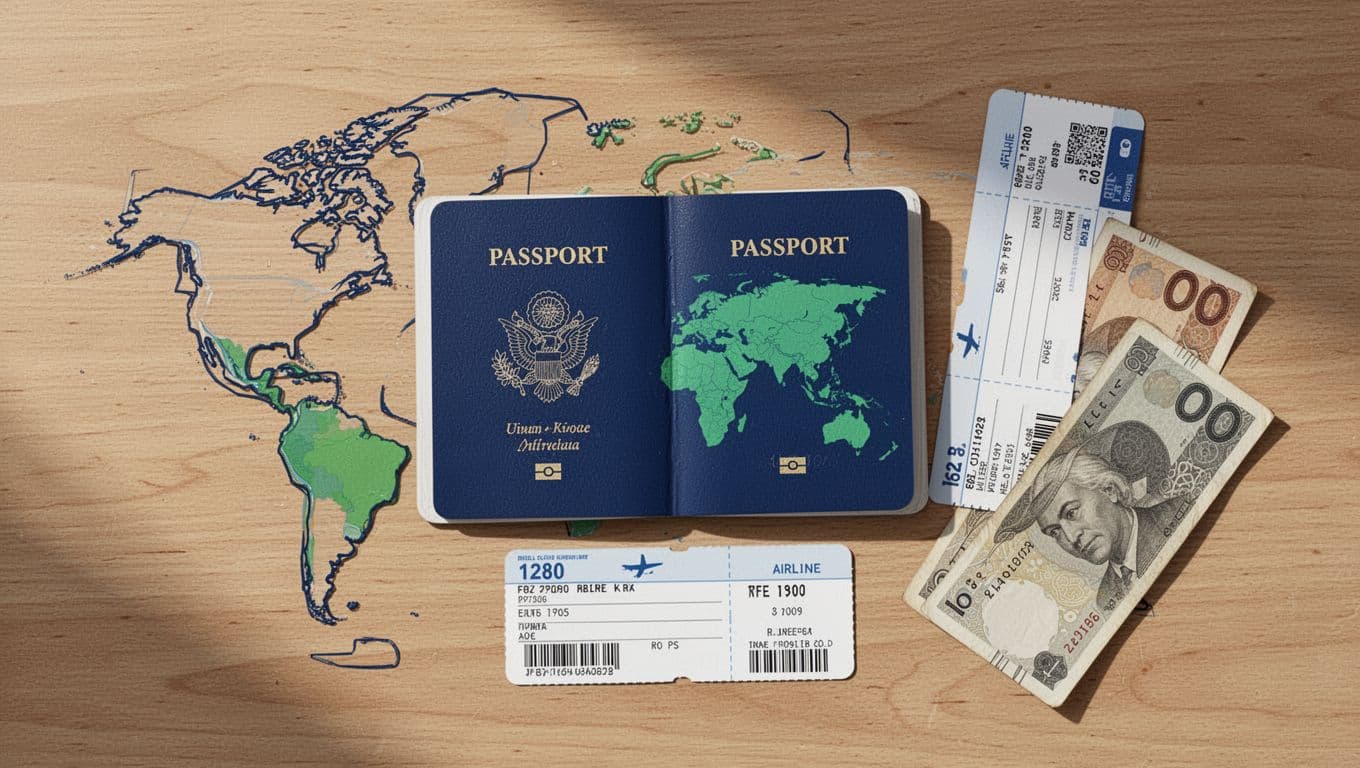
Always check the official entry requirements on GOV.UK before travelling — it takes two minutes and rules do occasionally change. If travelling with children or people on different passports, it’s worth checking individually. Getting this right before we reach the airport check-in desk is far better than discovering a problem there.
Flights, airports, and the small details that matter
Direct flights from major UK airports to Larnaca and Paphos take around 4 to 5 hours — short enough to feel manageable, long enough to arrive feeling like we’ve actually gone somewhere. The airport we choose matters more than people expect. Larnaca is better placed for the east coast (Ayia Napa, Protaras, Nicosia, Limassol). Paphos suits the west — nearby resorts, Akamas, and the Troodos mountain routes. Matching airport to base can cut transfer time dramatically.
A few practical wins worth knowing:
- Currency is the euro — familiar, easy to budget with
- Type G plugs work for all UK devices — no adaptor needed
- They drive on the left — hire car confidence goes up immediately
- Most people speak excellent English — language is rarely a barrier
Pick the right part of Cyprus for the holiday we want
Cyprus is compact — roughly 225km east to west — so no choice of base locks us into one corner. But each area has a genuinely different feel, and picking the right one from the start makes the whole trip smoother.
Paphos: the easiest all-round base for a first trip
I’d recommend Paphos to most first-timers without hesitation. It has a walkable harbour, decent beaches, a relaxed pace that suits couples and families equally, and some of the island’s best historic sites right on the doorstep. The combination of beach town and UNESCO-level archaeology in one place is genuinely rare.
The Paphos Archaeological Park — locally called Kato Paphos — has Roman mosaic floors that rival anything in the Mediterranean. The Tombs of the Kings feel stark and atmospheric in a way that polished museum visits rarely do. And Paphos harbour in the evening is one of the most pleasant places on the island to unwind with a meal and a glass of local wine. From here, Akamas and the Troodos mountains are both within easy driving distance.
Larnaca and Limassol: city bases with seafront life
Larnaca suits shorter breaks and easy arrivals — the airport is right there, the promenade is pleasant, and the pace is calm. Limassol is a step up in energy: longer seafront, better dining, more going on in the evenings, and a stronger base for road trips across the island. I’d put it simply: Larnaca is easy and unfussy; Limassol is livelier and more polished. Both work well, but for anyone who wants more than beach time, Limassol’s central position and food scene give it the edge.
Ayia Napa and Protaras: the island’s best sandy beaches
If the priority is clear water and soft sand, the south-east coast is the best place to be. Ayia Napa has the nightlife reputation, but its beaches are genuinely excellent — bright coves, good swimming, and a holiday atmosphere that’s hard to dislike. Protaras is calmer and better suited to families and couples who want an easier evening pace. Fig Tree Bay is the standout here: shallow, clear, and consistently one of the most beautiful beaches in Cyprus.
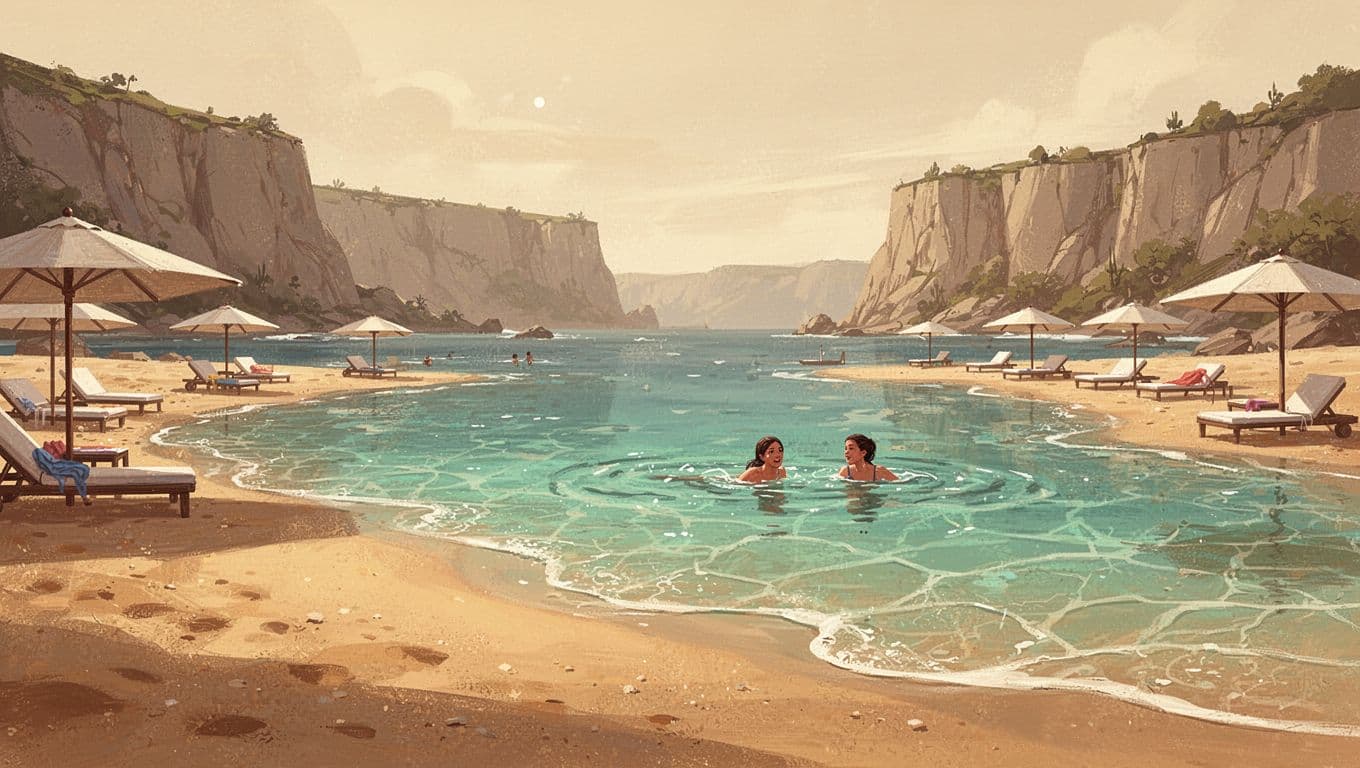
The two areas are close enough that we can stay in one and visit the other. So the choice comes down to evening preference: more buzz (Ayia Napa) or more peace (Protaras).
Troodos Mountains: villages, wine, and cooler air
Every good Cyprus trip should spend at least a day in the Troodos Mountains. The island’s coast is stunning, but this is where Cyprus feels most like itself — stone-built villages, vineyard roads, pine forests, Byzantine painted churches, and long taverna lunches in squares that haven’t changed much in decades.
Omodos is an easy entry point: compact, attractive, and well set up for wine tasting and a wander through traditional lanes. For walkers, the Troodos range has serious trails. In summer, the altitude makes the heat bearable in a way that coastal sightseeing simply isn’t.
The experiences that make Cyprus feel worth the trip
Beaches that earn their reputation
The beach photos do tell the truth in Cyprus — and that’s not always the case with Mediterranean destinations. The clearest, most photogenic water sits around the south-east (Protaras, Ayia Napa), but Paphos has good options too, including Coral Bay to the north. Larnaca’s Finikoudes beach is more urban, better for a morning swim than a full beach day.
The smart move is to pick a style rather than a list. One long, relaxed beach day beats three rushed stops where we never settle in.
Ancient sites worth more than a quick stop
Cyprus has more ancient history per square kilometre than most places in the Mediterranean, and the best of it feels genuinely alive rather than rope-off-and-read-the-plaque. Paphos Archaeological Park is the obvious starting point — Roman mosaics still holding colour after 1,700 years, tombs carved from limestone, theatre ruins with sea views. Give it two to three hours rather than rushing through.
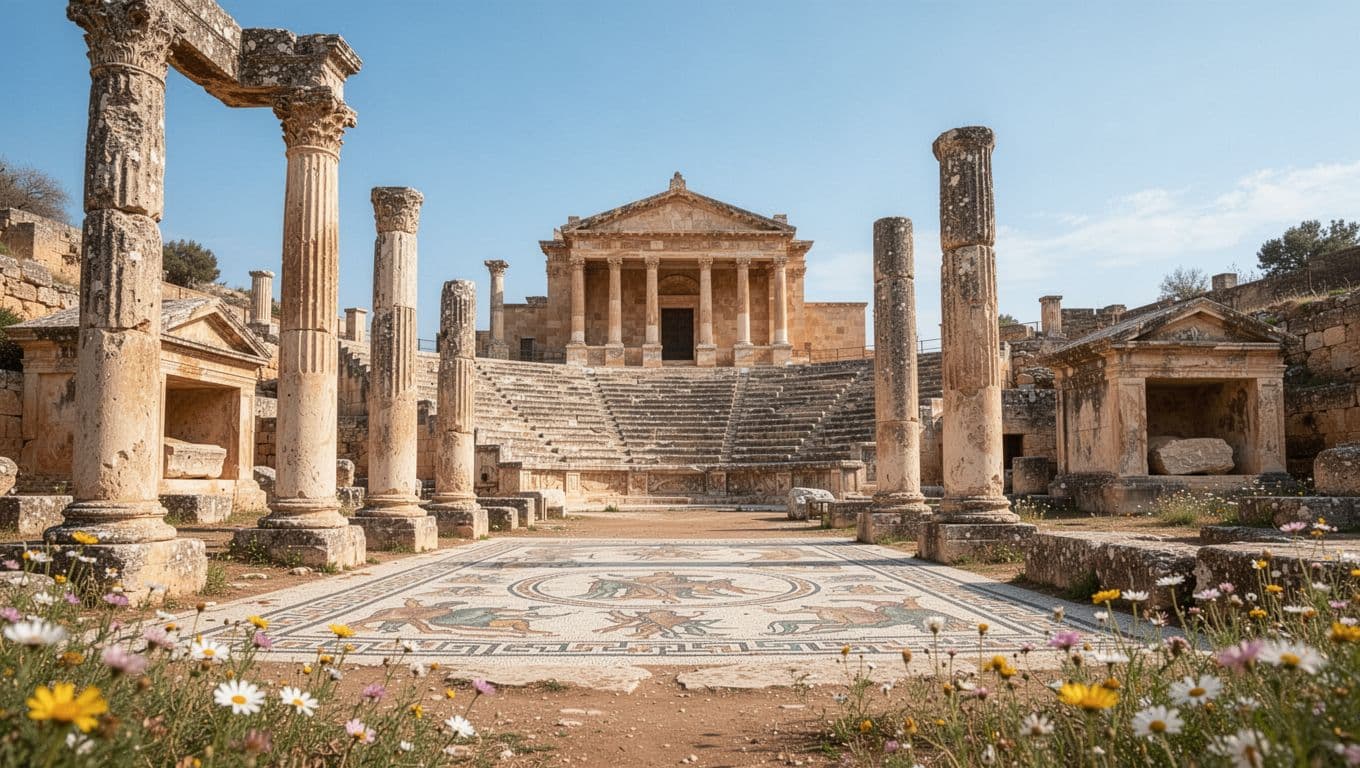
Kourion, near Limassol, is often overlooked but shouldn’t be — a Greco-Roman city perched on a clifftop above the sea, with a restored theatre that still hosts performances. Nicosia deserves a half-day for its walled old city and the strange experience of walking up to the Green Line, the last divided capital in Europe.
Akamas, the Blue Lagoon, and the wilder coast
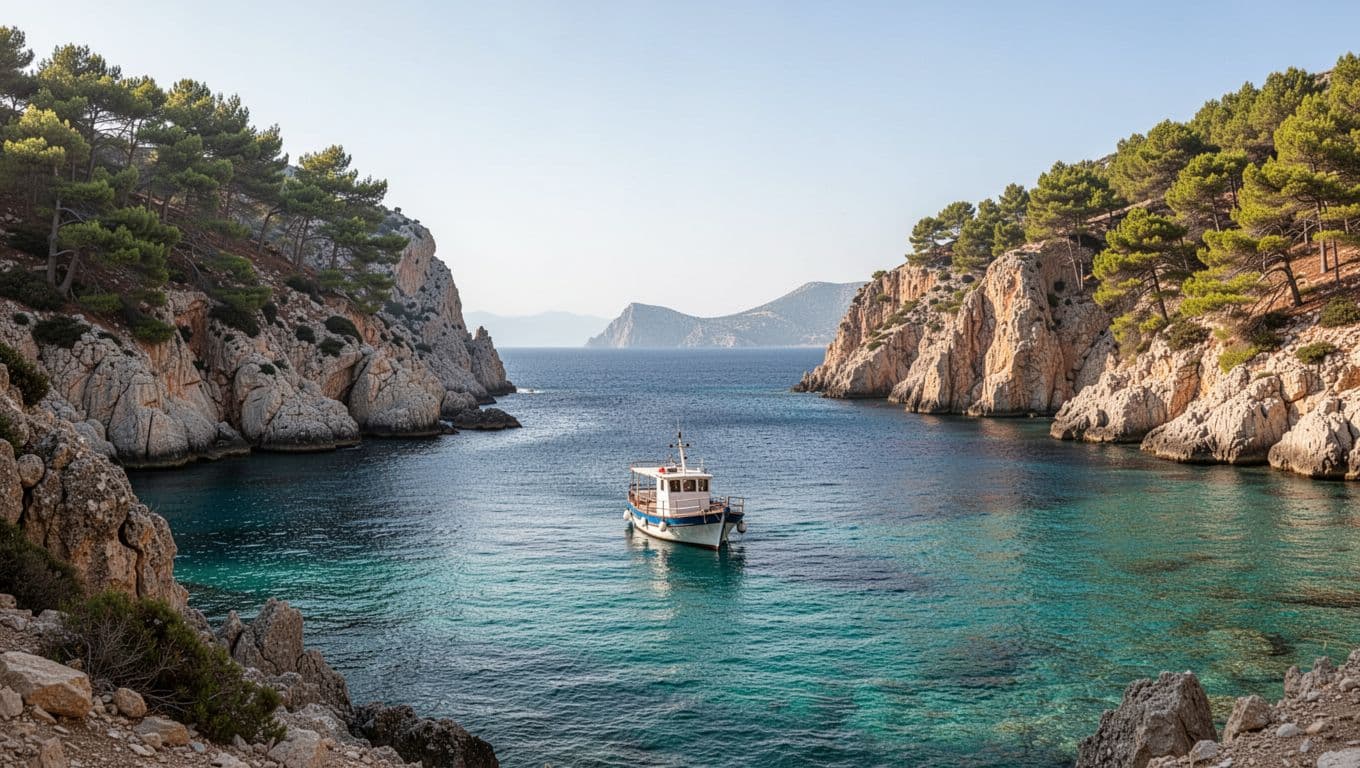
Akamas Peninsula is the part of Cyprus that doesn’t feel like a resort. Rough tracks, open scrubland, sea caves, and that famous Blue Lagoon — genuinely that blue, and worth getting up early for before the tour boats arrive. The area suits boat trips, short hikes, or simply driving out from Paphos for a very different view of the island. Spring is the best time for exploring on foot; summer it’s best experienced from the water.
Food and drink: meze, kleftiko, and local wine
One of the things I genuinely didn’t expect from Cyprus was how good the food is — and how much of it arrives in one sitting. A Cypriot meze isn’t a starter; it’s fifteen or twenty small dishes spread across a couple of hours, covering everything from hummus and halloumi to slow-cooked lamb and grilled vegetables. Budget time, not just appetite.
Kleftiko — slow-cooked lamb sealed in a clay oven — is the dish to seek out in a traditional taverna. Halloumi is grilled fresh rather than squeaky-in-a-packet, and local wines from the Commandaria region and Troodos vineyards are worth trying beyond the bottle we pick up in a supermarket. Avoid the tourist-strip restaurants in favour of anything a local recommends or that looks a bit rough around the edges; those are usually the ones worth returning to.
Road trips and getting around Cyprus
Hiring a car unlocks a different version of Cyprus. The main roads are excellent, signage is mostly clear, and the left-hand driving feels natural for UK visitors. A car opens up the mountain villages, quieter beaches, and coastal roads that buses simply don’t reach.
A classic self-drive route might run: Paphos harbour → Akamas Peninsula → Troodos mountain villages (overnight in Kakopetria or Omodos) → Limassol old town and Kourion → Larnaca and Protaras. That covers the island’s highlights in five or six days without feeling rushed. The roads between the main towns are fast; the mountain roads are slower but the views make up for it.
For those who prefer not to drive, shared taxis (service taxis) run between major towns at reasonable prices. Urban buses exist in the main cities but schedules are limited, especially on Sundays. For village and mountain exploration, a car is really the only practical option.
My Take
Cyprus is one of those destinations where first-timers almost always say they underestimated it. The history is better than expected, the food is genuinely excellent, and the variety — beach, mountain, ancient site, harbour town — in such a compact island is rare. I’d point most people toward Paphos as a base, hire a car without hesitation, and build at least one full Troodos day into the itinerary. The meze lunches that stretch into the afternoon are the part people seem to remember most.
Explore Cyprus by destination
Once you’ve decided on the type of trip, our destination guides go into much more depth on each area. We’ve covered all the major destinations across the island:
- Limassol travel guide — the old town, marina, beaches, and the island’s best food scene
- Nicosia travel guide — Europe’s last divided capital, the walled city, and crossing to the north
- Ayia Napa travel guide — the beaches, the nightlife, Cape Greco, and what the resort is really like
- Larnaca travel guide — the Salt Lake, Saint Lazarus, the seafront promenade, and flamingos in winter
- Famagusta travel guide — Gothic ruins, Venetian walls, and the ghost town of Varosha in the north
- Protaras travel guide — Fig Tree Bay, the best family beaches, and a calmer alternative to Ayia Napa
- Troodos Mountains travel guide — wine villages, Byzantine churches, hiking trails, and cool air
Frequently asked questions about visiting Cyprus
Do UK travellers need a visa for Cyprus?
No visa is required for UK citizens visiting Cyprus for tourism for up to 90 days within any 180-day period. Passport validity rules apply — it must be issued within the last 10 years and valid for at least 3 months after the departure date.
What is the best time of year to visit Cyprus?
April to May and September to October offer the best balance of warm weather, manageable temperatures for sightseeing, and lower prices than peak summer. July and August are hottest and busiest but suit full beach holidays well.
Which airport should I fly into — Larnaca or Paphos?
Larnaca suits the east coast (Ayia Napa, Protaras, Limassol) and Nicosia. Paphos suits the west coast and Akamas area. Match the airport to where you’re staying and you’ll save on transfer time and cost.
Do I need a hire car in Cyprus?
For a simple beach holiday in one resort, no. For exploring mountain villages, quieter beaches, or driving between different parts of the island, a hire car makes a significant difference. Driving on the left makes it easy for UK visitors.
Can I visit Northern Cyprus?
Yes — crossing the Green Line into the Turkish Republic of Northern Cyprus is possible for UK visitors through 24-hour checkpoints in Nicosia and other crossing points. The north has Crusader castles, quieter beaches, and a distinctly different atmosphere. Check your hire car insurance covers crossing before going, as not all policies do.
For a full rundown of the island’s archaeological and historical highlights, our guide to historical sites in Cyprus covers all three UNESCO sites — the Paphos mosaics, Choirokoitia and the Byzantine Troodos churches — plus Kourion, Famagusta and the mountain castles.
Is Cyprus good for families?
Very much so. Protaras has some of the island’s calmest and most accessible beaches, Paphos suits mixed-age groups with its history and harbour, and the island’s short flight time and familiar UK-style infrastructure make logistics simple. English is spoken almost everywhere.
Pingback: Paphos vs Limassol: Which Cyprus Holiday Suits Us?