A Cyprus holiday can cost less than a week in many Spanish or Italian resort towns. However, the cost of travelling in Cyprus depends on the season, resort, accommodation standard and booking lead time.
The figures below are planning estimates, not guaranteed quotes. Your total can also change with GBP to EUR exchange rates, especially for longer stays.
We’d use these budgets to plan flights, accommodation, food, transport, car hire and sightseeing. The article also compares practical spending choices, with prices shown in pounds and euros where helpful.
A comfortable trip doesn’t need a five-star resort or restaurant meals twice daily. You can swim at free beaches, eat well in family-run tavernas and see ancient sites without exhausting your budget.
Here is what UK travellers can realistically expect.
At a Glance
- Plan on around EUR70 to EUR100 per person per day for a careful trip, EUR120 to EUR180 for a comfortable mid-range holiday, or EUR220+ for a resort-focused break, excluding return flights.
- A seven-night Cyprus holiday can range from about £700 to £1,050 for a solo budget trip to £3,300+ for a couple staying in a quality beach resort. Season, resort, accommodation and booking lead time make the biggest difference.
- Larnaca and Paphos often offer better value and easier public transport, while Ayia Napa, Limassol and prime seafront locations can cost more. Hiring a car is most useful for mountain villages, wineries, remote beaches and rural archaeological sites.
- Save money by travelling in the shoulder season, comparing complete flight prices, using supermarkets and local tavernas, staying slightly away from the seafront, and mixing free beaches and coastal walks with paid attractions.
- British visitors should check current FCDO entry guidance, travel insurance exclusions and rental-car rules before travelling, particularly if planning to cross into North Cyprus or drive.
Cyprus travel costs: realistic daily budgets
Use these figures as a planning guide for a daily travel budget in the Republic of Cyprus. They apply per person and exclude return flights. They include accommodation, food, local travel and a modest allowance for activities, including sightseeing fees.
| Travel style | Daily budget per person | What it usually covers |
|---|---|---|
| Careful budget trip | EUR70 to EUR100 | Budget hostels or a basic room, public transportation, supermarket breakfasts and free beaches |
| Comfortable mid-range trip | EUR120 to EUR180 | Shared hotel room, taverna meals, some taxis or car hire, paid sights |
| Resort-focused holiday | EUR220+ | Luxury resorts, drinks, excursions and regular restaurant meals |
At an indicative planning rate of roughly EUR1 to GBP0.86, a EUR120 daily budget is about £103. Figures are per person, with shared accommodation assumed where applicable. Exchange rates move, so leave a little room in your sterling estimate.
Budget travelers can usually reach the careful range with basic rooms, local meals and free beaches. Couples get better value because they can split a room, car hire and taxis. Solo travellers can still keep costs down, although private rooms and rental cars take a larger share of the day.
What a one-week Cyprus holiday can cost
For a typical seven-night trip, flights and accommodation make the largest difference. September often offers good value, although early-month dates can still carry late-summer prices.
Every total below includes UK return flights, seven nights’ accommodation, food, local transport and activities. The figures distinguish solo, couple and family travel, with the family estimate based on a self-catering apartment.
| Trip type | Indicative total cost |
|---|---|
| Solo traveller on a careful budget | £700 to £1,050 |
| Couple on a mid-range break | £1,850 to £2,800 |
| Family of four in a self-catering apartment | £3,000 to £4,700 |
| Couple in a quality beach resort | £3,300+ |
A mid-range couple’s daily travel budget is EUR60 to EUR110 together, around £50 to £95, covering food, local transport, activities and sightseeing fees. Over seven nights, that allowance totals EUR420 to EUR770, or roughly £360 to £660 before accommodation and flights. Indicative flight costs are £180 to £350 per person for round-trip flights from the UK, with luggage and airport transfers potentially extra.
Ayia Napa and Limassol hotels can push totals upwards in summer, as resort locations and seasonal demand raise accommodation costs. Paphos and Larnaca usually offer more choice at lower nightly rates, especially away from the seafront. Actual prices depend on the date, neighbourhood, accommodation standard, school holidays, weekends, exchange-rate changes and different board bases.
Accommodation costs by area and style
Where you stay affects the holiday as much as the price. The cheapest room doesn’t always mean the lowest accommodation expenses once taxis, parking, air conditioning and meals are included.
Budget hostels, guesthouses and private rooms
Hostel beds generally fall around EUR10 to EUR35 per night, though availability is limited outside the bigger resorts. Simple guesthouses and private rooms often cost EUR30 to EUR60, particularly in the cooler months.
Paphos has a broad spread of small hotels and self-catering properties. It suits visitors who want plenty of choice around the harbour and old town. Larnaca also works well for value-focused breaks because the centre, beach and airport are close together. Fig Tree Bay and Coral Bay can be convenient, but their seafront locations often carry a premium.
Before booking, check the seafront position, peak-date pricing, air conditioning, parking, breakfast, cleaning charges and cancellation terms. A low headline rate can look less appealing once every extra is added.
Mid-range hotels and apartments
Expect EUR60 to EUR110 a night for well-reviewed mid-range hotels or apartments outside peak dates. In July and August, similar rooms can cost far more, especially near Fig Tree Bay, Coral Bay and Limassol Marina.
Self-catering gives families and longer-stay visitors useful control over spending. Buying breakfast supplies, fruit and drinks at a supermarket can save EUR15 to EUR30 a day compared with eating every meal out.
As a planning option, we often favour a quieter coastal base in a village or residential area within a short drive of the main resort. You get more space, easier parking and a better chance of finding a local bakery nearby.
These prices are indicative research estimates, so check current listings before booking. Availability, seafront position and cancellation terms can change the final rate considerably.
Flights and the seasonal price swing
Flight costs are often the most volatile part of a Cyprus budget. Round-trip flights from the UK to Larnaca or Paphos may cost around £80 to £180 when booked early. These researched planning ranges aren’t guaranteed live prices. More typical booked-ahead fares sit around £180 to £350.
Baggage can quickly change the equation. A cheap fare may lose its advantage once you add a cabin case, checked suitcase, seat selection, transfers and airport parking. Compare the complete booking rather than the headline price. Travel insurance can protect against eligible cancellation or disruption costs, though policies don’t cover every cause.
When Cyprus costs the most
July and August are usually the most expensive months. This is peak season, with school holidays, hot weather and high demand. Flight prices, hotel rates and car rental costs can all rise together.
Late September and October can offer a shoulder season balance, with prices often softening after the school holidays. Sea temperature may remain pleasant, and October can bring better hotel deals. Weigh the savings against local weather and resort opening hours.
When to travel for lower prices
November to March often brings the lowest accommodation rates, apart from Christmas and New Year. This off-peak season is quieter in coastal resorts, while mountain villages and city breaks become more appealing.
April and May are another shoulder season, offering greener scenery, good walking weather and lower prices than high summer. Easter dates can still lift fares, so weigh the savings against local weather, sea temperature and resort opening hours.
Food and drink without tourist-area prices
Cyprus is kind to anyone who enjoys a long, uncomplicated meal. Its food and dining scene offers generous portions without high prices, especially when you eat at local tavernas a few streets back from the promenade.

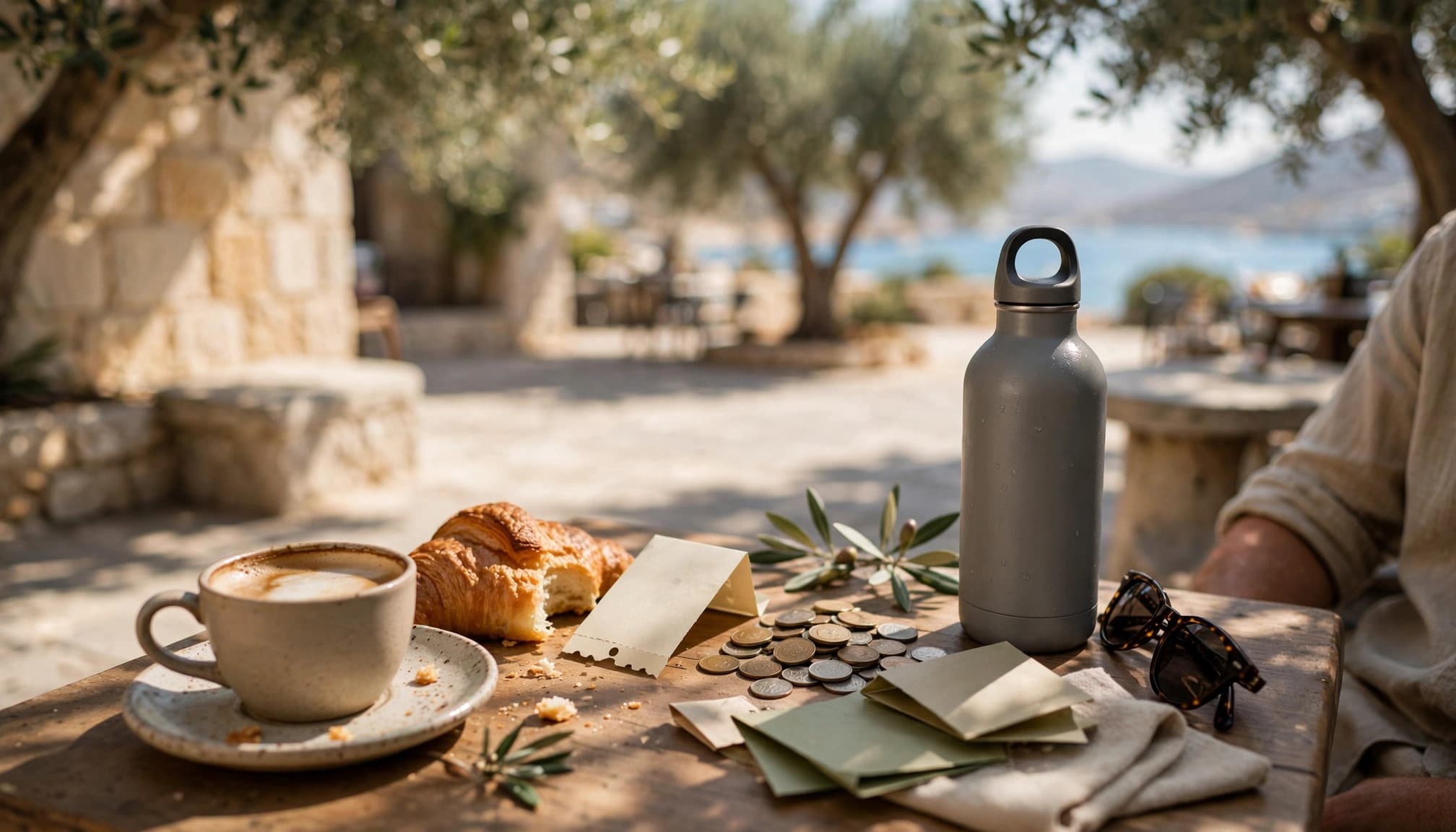
Coffee commonly costs EUR2 to EUR4, about £1.70 to £3.40. A bakery breakfast, such as a pastry, sandwich or halloumi pie, can be EUR3 to EUR7, roughly £2.50 to £6. At a village restaurant, allow EUR10 to EUR20 for a filling lunch or simple evening main, around £8.50 to £17. Portion sizes, drinks, seafood, location and season can all affect the final bill.
What to spend on a traditional meze meal
A shared meze can be excellent value when you arrive hungry and enjoy several small dishes together. In a village taverna, budget around EUR15 to EUR25 per person, or approximately £13 to £21. Waterfront restaurants and busy resort areas may charge more.
Ask whether the meze is priced per person and whether drinks are extra. It often arrives in many small courses, so ordering starters as well can leave you with too much food.
The prices above are useful menu benchmarks, rather than fixed costs. Across a week, a couple mixing bakery breakfasts, supermarket lunches and four or five taverna dinners can plan on EUR60 to EUR90 per day, about £50 to £76 on average. This estimate assumes modest drinks and excludes cocktails, premium seafood and frequent resort restaurants, which can raise the total quickly.
Public transport or car rentals in Cyprus
You do not need a car for a beach-based holiday in central Larnaca, Paphos or Ayia Napa. Public transportation covers the main towns and tourist strips, while short journeys typically cost around EUR1.50 to EUR2.50.
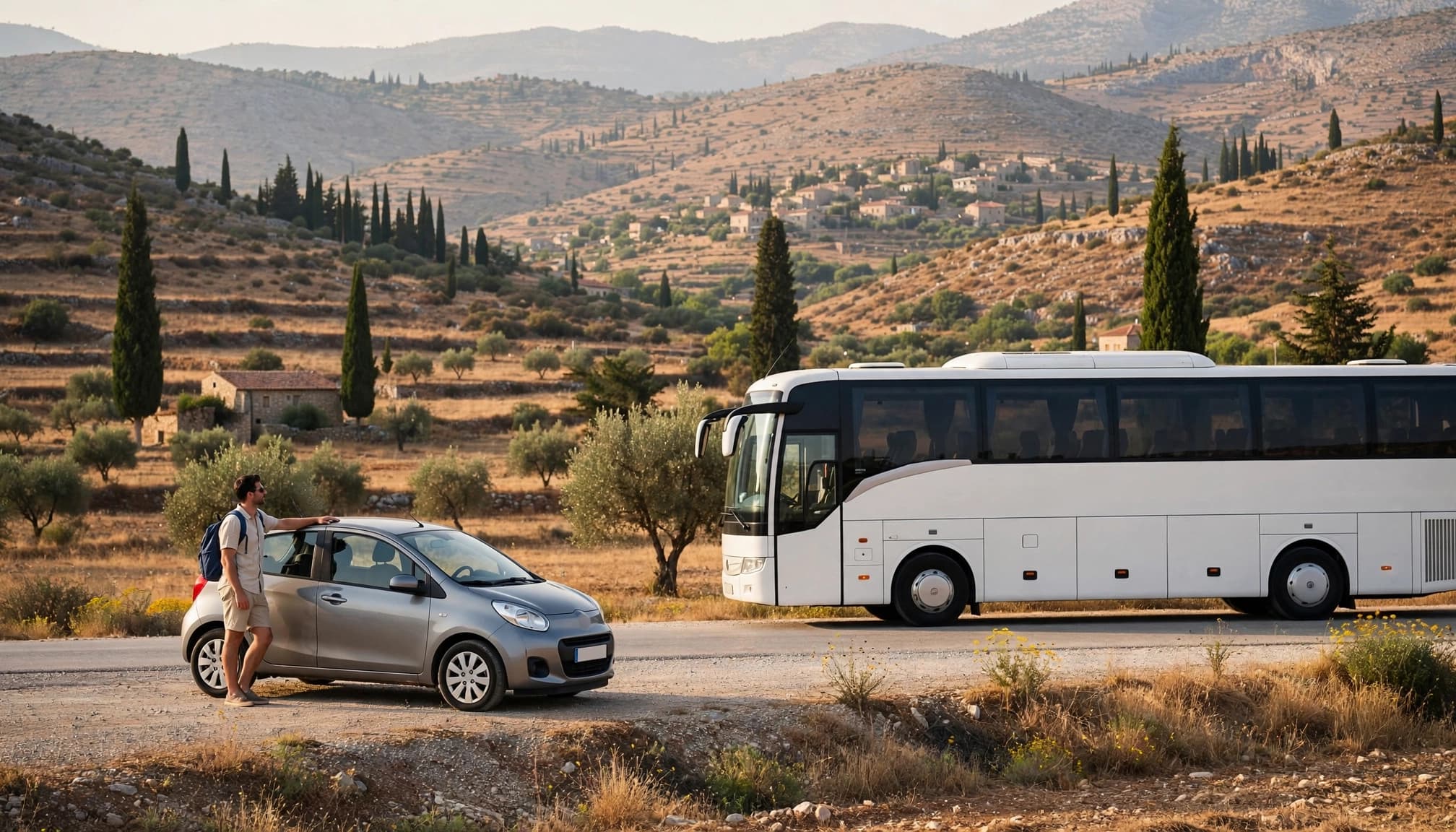
Intercity trips and airport routes often cost more, but still undercut taxis by a wide margin. Check timetables before choosing a bus-only itinerary, particularly on Sundays or when staying in smaller villages.
When hiring a car makes financial sense
Hiring a car suits travellers who want the Troodos Mountains, wineries, remote beaches or archaeological sites in one week. Cyprus drives on the left, making the adjustment easier for UK licence holders.
Car hire prices in September can start at EUR25 to EUR45 a day for a small manual. Using an exchange rate of EUR1 = GBP0.86, that is roughly GBP22 to GBP39. Automatics commonly cost EUR35 to EUR60, or about GBP30 to GBP52, while larger family cars and SUVs can exceed EUR55, roughly GBP47 daily.
Book early, especially for an automatic. Check current licence requirements and rental conditions before paying. Confirm the fuel policy, mileage limit, deposit and excess, plus child-seat, additional-driver, airport collection and cross-border terms. Some of these extras can add more than the base hire rate.
The insurance detail that catches people out
A low rental price may come with a large collision damage excess, while third-party cover can have separate terms. Travel insurance doesn’t replace vehicle cover or remove the rental excess. Some policies also exclude tyres, glass, the undercarriage or keys, so read the terms before accepting separate desk cover.
Take timestamped photos of the vehicle at collection and return. Keep the final fuel receipt too. These small checks are more useful than buying every optional extra without understanding it.
Beaches, ruins and paid activities
Some of Cyprus’s best days cost almost nothing, even when ancient archaeological sites are nearby. Nissi Beach, the Paphos coastal path, Cape Greco viewpoints and many village churches are free to enjoy.
Paid archaeological sites often sit in the EUR2.50 to EUR17 range. Paphos Archaeological Park and the Tombs of the Kings fit comfortably into a modest sightseeing budget. Official sightseeing fees can change, so check current prices before visiting.
Boat trips tend to cost EUR25 to EUR60 per person. Wine tastings may start around EUR20, while water parks and family attractions often cost EUR20 to EUR40. Check your travel insurance covers planned activities, and read the exclusions carefully.
Balance paid historical sites with free beaches, coastal paths and churches. Check sightseeing fees when planning each day, then choose one paid excursion for every few free days. A beach day, harbour stroll and taverna dinner can be one of the trip’s best-value combinations.
Spending in North Cyprus and entry planning
The Republic of Cyprus uses the euro. North Cyprus uses the Turkish lira, so day-to-day prices may appear lower. Exchange-rate swings and crossing arrangements can complicate the comparison.
Don’t assume a rental agreement from the Republic permits you to cross the Green Line into North Cyprus. Before booking, obtain written confirmation from the hire company about permission, insurance cover and any driving restrictions on both sides.
Passport and visa checks for British visitors
British citizens can usually visit Cyprus without a visa for up to 90 days in any 180-day period. Your passport must have been issued less than 10 years before arrival and remain valid for at least three months after your planned departure.
For current visa requirements, check the Cyprus entry requirements from the FCDO before booking, as passport and border rules can change. The official Visit Cyprus entry guidance is also useful for checking local requirements.
Travel insurance should cover medical treatment, cancellations and the activities you’ve booked. If you plan to drive, confirm that your policy and rental cover match your route, including any cross-border arrangements.
Ways to cut the cost without spoiling the trip
Small choices make a noticeable difference across seven nights. We’d spend money on experiences that are hard to recreate at home, then trim costs that add little to the holiday. The biggest savings usually come from avoiding daily mark-ups, not cutting every treat.
- Stay a 10 to 20-minute walk from the busiest seafront, where rooms and drinks are often cheaper. Budget hostels suit solo travellers and flexible visitors, but availability and private-room supplements vary.
- Fly midweek where possible, then compare round-trip flights by the total fare after baggage and seat fees. The saving depends on your dates.
- Use a supermarket for water, breakfast food, fruit and beach snacks.
- Rent a car for only the days you plan to explore inland, rather than for the whole break.
- Choose a taverna with local diners and a short menu, rather than one built around tourist photos.
- Visit free beaches and coastal paths between paid ruins, boat trips or water parks. This keeps sightseeing fees from taking over the week.
- Keep travel insurance in the budget rather than removing it to save money. Compare excesses, exclusions and activity cover instead.
Package holidays can also work out cheaper than booking separately, particularly for school holiday dates. Still, compare the board basis, baggage, transfers, cancellation terms and total price against separate bookings. A lower-priced all-inclusive deal may beat a hotel-only booking, while a self-catering apartment often wins for families who prefer flexible meals.
Related reading for a better Cyprus itinerary
Pair your budget with practical local advice to build a more useful itinerary.
- Weigh up the resorts in Paphos versus Limassol, or build a base around the Larnaca travel guide.
- Check the paperwork in our entry requirements guide and sort your money with the currency guide.
- Follow a Larnaca itinerary covering airport access, nearby sights and convenient places to stay.
- Plan a Troodos Mountains driving route with village stops, scenic roads and winery suggestions.
- Find family-friendly Cyprus beaches with calm water, shade and useful facilities.
- Use a local food guide to discover Cypriot meze, bakeries and traditional tavernas.
Final thoughts on budgeting for Cyprus
Cyprus rewards a balanced budget. We don’t need to spend heavily every day when a comfortable room, memorable meals and transport suited to our plans matter more. The final total varies with the season, resort, accommodation standard, party size, exchange rate and travel style.
The clearest way to control Cyprus travel costs is to book early where practical and compare the complete flight and accommodation price. We can set a daily travel budget around free beaches and paid attractions, then hire a car only on days when it adds real value. Use the tables and source links to refine your plans.
Questions readers ask about Cyprus costs
Is Cyprus expensive compared with other Mediterranean destinations?
Cyprus is usually more affordable than many peak-season holidays in Italy, France or the Greek islands. It can cost more than Turkey, especially for hotels, car hire and imported goods. These comparisons are indicative, and your travel month matters more than the island’s overall reputation.
How much spending money should a couple take for one week?
For two people on a mid-range trip with breakfast included, allow an indicative EUR500 to EUR800 for food, local transport and sightseeing fees. This excludes car hire, which should be budgeted separately for inland day trips. Taking a mix of card payment and some euros is sensible.
Is a car necessary in Cyprus?
A car isn’t necessary for a resort holiday in Larnaca, central Paphos or Ayia Napa. It becomes useful when you want to see mountain villages, wineries, quieter beaches and rural archaeological sites without relying on bus timetables.
Can North Cyprus be included in a Cyprus itinerary?
It can be included, but plan the crossing carefully. The Turkish lira is widely used, while euros may be accepted in some places at varying exchange rates. Green Line crossings can require your passport and other documents, so check current official entry guidance. A hire car may not be permitted to cross, and cover can differ, so confirm rental permission and insurance with the company.
Is travel insurance needed for Cyprus?
It’s sensible to have cover and check the current policy wording before you travel. Make sure it includes medical treatment, cancellation, planned activities and driving, where relevant. Exclusions can apply to car hire, adventure activities and pre-existing medical conditions.
What is the cheapest month to visit Cyprus?
January and February often have the lowest hotel prices, although weather is less reliable for beach holidays. For warm sea weather with better value than August, we would look first at May, early June, late September and October.