At the end of an ordinary shopping street, Nicosia’s divided past becomes impossible to miss. A Nicosia Buffer Zone Crossing is usually quick for visitors, yet the wrong airport, an unsuitable hire car or missing travel document can derail your day.
If you entered Cyprus through Larnaca or Paphos and carry the right documents, you can cross at an official checkpoint, explore the northern old city and return later. The key is to treat the line as a controlled crossing, not a casual stroll between neighbourhoods.
Nicosia Buffer Zone Crossing: What to Expect
For most UK holidaymakers, a Nicosia Buffer Zone Crossing on foot is simple. You show your passport at an official checkpoint, walk through the controlled passage, then present it again on the other side.
There is no advance booking for an ordinary day visit. However, officers can carry out checks, queues can form at busy times and rules may change without much notice.
Use official checkpoints only
The Green Line is a United Nations-controlled buffer zone, not an open border. Stay on marked routes and use the recognised crossing points in central Nicosia.
The UNFICYP overview of the buffer zone explains why access is restricted outside designated crossings. Barriers, watchtowers and abandoned buildings are part of a live ceasefire line.
Expect a brief but formal process
At Ledra Street, the crossing often feels less dramatic than visitors expect. Cafes, shops and pedestrians sit close to the checkpoint on both sides.
Still, have your passport ready before you reach the booth. Keep your phone away until you have passed through, follow instructions and don’t photograph officers, control points or military positions.
Bring the document used to enter Cyprus
A passport is the most sensible document for British travellers. Keep it with you throughout the day, rather than leaving it in your hotel safe.
UK driving licences, photocopies and passport photos on your phone are not substitutes for a travel document. Children also need their own valid passport.
Passport rules for UK visitors
British citizens can usually visit the Republic of Cyprus without a visa for up to 90 days in any 180-day period. Time spent north of the Green Line counts within that total, so don’t treat a day in northern Nicosia as time outside Cyprus.
Check the current UK entry requirements for Cyprus before travelling, especially if your passport is close to expiry or you have a long multi-stop itinerary.
Many EU citizens can use a national identity card, but you should use the same document when returning through the checkpoint. British visitors should rely on a passport.
Visa holders need extra care
If you hold a non-UK passport or need a visa for the Republic of Cyprus, confirm the rules before you plan a crossing. Your nationality, residence permit and previous entry point can affect whether you may return to the Republic-controlled areas.
Officers in the north often record a visit on a separate slip or electronic system rather than stamping your passport. Do not request a souvenir stamp or assume the same procedure applies to every nationality.
Entering through an official Green Line checkpoint after arriving in Larnaca or Paphos is different from first entering the island through Ercan Airport or a northern port.
Choose the right Nicosia crossing point
The best checkpoint depends on whether you are walking or driving. For a first visit focused on the old city, Ledra Street is normally the easiest choice.
The Republic of Cyprus publishes its official Green Line crossing regulations, although you should still check same-day conditions before setting out.
Pick the checkpoint to suit your plans
| Crossing point | Best for | Practical notes |
|---|---|---|
| Ledra Street, also called Lokmaci | Walking into the old city | Pedestrian-only and central, with Büyük Han and Selimiye Mosque within easy reach |
| Ledra Palace | Pedestrians staying west of the walled city | A useful walking option if you are coming from the Engomi or embassy district |
| Agios Dometios, also called Metehan | Private cars and permitted hire cars | The main Nicosia vehicle crossing, west of the historic centre |
Ledra Street puts you directly between southern Ledra Street and Arasta Street in northern Nicosia. It is the practical choice if you want a relaxed lunch, a short old town walk and an easy return.
Local transport systems do not work as one joined-up city network. Take a bus or taxi to your chosen checkpoint, then continue on foot or arrange separate transport on the other side.
Check opening times before you leave
Ledra Street has often operated around the clock, but don’t build an itinerary around a late-night crossing without checking first. Staffing, public holidays and operational decisions can affect access.
Agios Dometios is particularly important to verify if you need insurance or plan to drive. A checkpoint may remain open while a nearby insurance desk or rental-car support service has different hours.
Plan the walk through the checkpoint
Allow extra time on weekends, public holidays and during school breaks. A quiet crossing can take minutes, while a coach group or added checks can slow the line.
- Arrive at the correct checkpoint with your passport in hand.
- Pass through the first control point and follow the marked pedestrian route.
- Present your document at the second control point when asked.
- Keep any entry slip safely with your passport.
- Return through the same official crossing when you are ready.
Do not use the buffer zone as a shortcut shown on a map. Streets can end at barriers, and the area between checkpoints is not open for wandering.
Driving across the Green Line
A car gives you flexibility beyond Nicosia, but it also creates the most common crossing problem. A hire car collected in the Republic of Cyprus is not automatically allowed into the north.
We recommend crossing on foot unless driving is central to your plans. The northern old city is compact, and Ledra Street is far less stressful than sorting insurance at a vehicle checkpoint.
Get written hire-car permission first
Ask the rental company before you book, not when you are standing at Agios Dometios. Many firms prohibit travel north of the Green Line, while others allow it only with written permission and named drivers.
Request clear answers on whether you may cross, which checkpoint you may use and what paperwork you must carry. Take your rental agreement, driving licence, passport and the vehicle documents supplied by the company.
A booking confirmation from a comparison site does not override the rental firm’s cross-border rules.
Buy separate north-side insurance
You will usually need to buy compulsory local third-party vehicle insurance at the checkpoint before taking a car into the north. Your Republic of Cyprus policy, credit-card cover or hire-car excess waiver often does not apply there.
Third-party cover may not pay for damage to the vehicle you are driving. Read the policy, save the emergency contact number and check the period of cover before leaving the booth.
Prices vary by vehicle type, cover length and checkpoint arrangements, so don’t rely on an old blog post quoting a fixed fee. Check the FCDO’s Cyprus safety advice and confirm the details directly with your insurer and rental company.
Arriving through Ercan Airport carries risks
A legal crossing within Nicosia is not the same as entering Cyprus through the north. This distinction matters if your holiday includes the Republic-controlled areas.
The Republic of Cyprus considers entry through Ercan Airport or ports in the north illegal. The issue can arise when you later try to cross south, leave from Larnaca or Paphos, or deal with immigration officials.
Fly into Larnaca or Paphos for a two-sided trip
If you want to stay in both parts of the island, the straightforward route is to arrive through Larnaca or Paphos, then use an official Green Line checkpoint during your trip.
The FCDO’s Cyprus entry guidance warns that entering through the north can lead to fines, refusal of entry or exit, or problems crossing back north.
Don’t assume a visa resolves the issue
A visa, hotel booking or onward flight does not remove the Republic’s position on unauthorised entry points. This can be more serious for travellers who need a Cyprus visa or have limited permission to enter.
For a holiday that includes Nicosia, the south coast and northern sights, arriving at Larnaca or Paphos avoids the immigration uncertainty linked to Ercan.
Why the Green Line changes the city
Nicosia is widely described as Europe’s last divided capital. The division is most visible inside the Venetian walls, where busy shopping streets can end at fences, sandbags or buildings left unused for decades.
The Green Line first emerged during intercommunal violence in 1963. United Nations peacekeepers arrived in 1964, and the present island-wide buffer zone followed the August 1974 ceasefire.
A narrow zone through central Nicosia
In parts of Nicosia, the buffer zone is only a short distance wide. Elsewhere on the island, it extends for kilometres.
The UN account of operations since 1974 describes a zone that varies from less than 20 metres wide in Nicosia to around seven kilometres near Athienou.
This history gives a crossing more weight than a normal city break activity. It is also why the contrast between the two sides can feel so immediate.
Respect the restricted areas
Do not enter abandoned properties, reach through barriers or ignore signs. The buildings may look frozen in time, but the buffer zone remains controlled territory.
Photography rules vary, so ask before taking close pictures around checkpoints. A quick photo is never worth an argument with security staff.
Explore northern Nicosia after Ledra Street
Northern Nicosia, commonly known as Lefkoşa, rewards slow walking. The main historic sights lie close together, so you can see a lot without booking a tour or using a car.
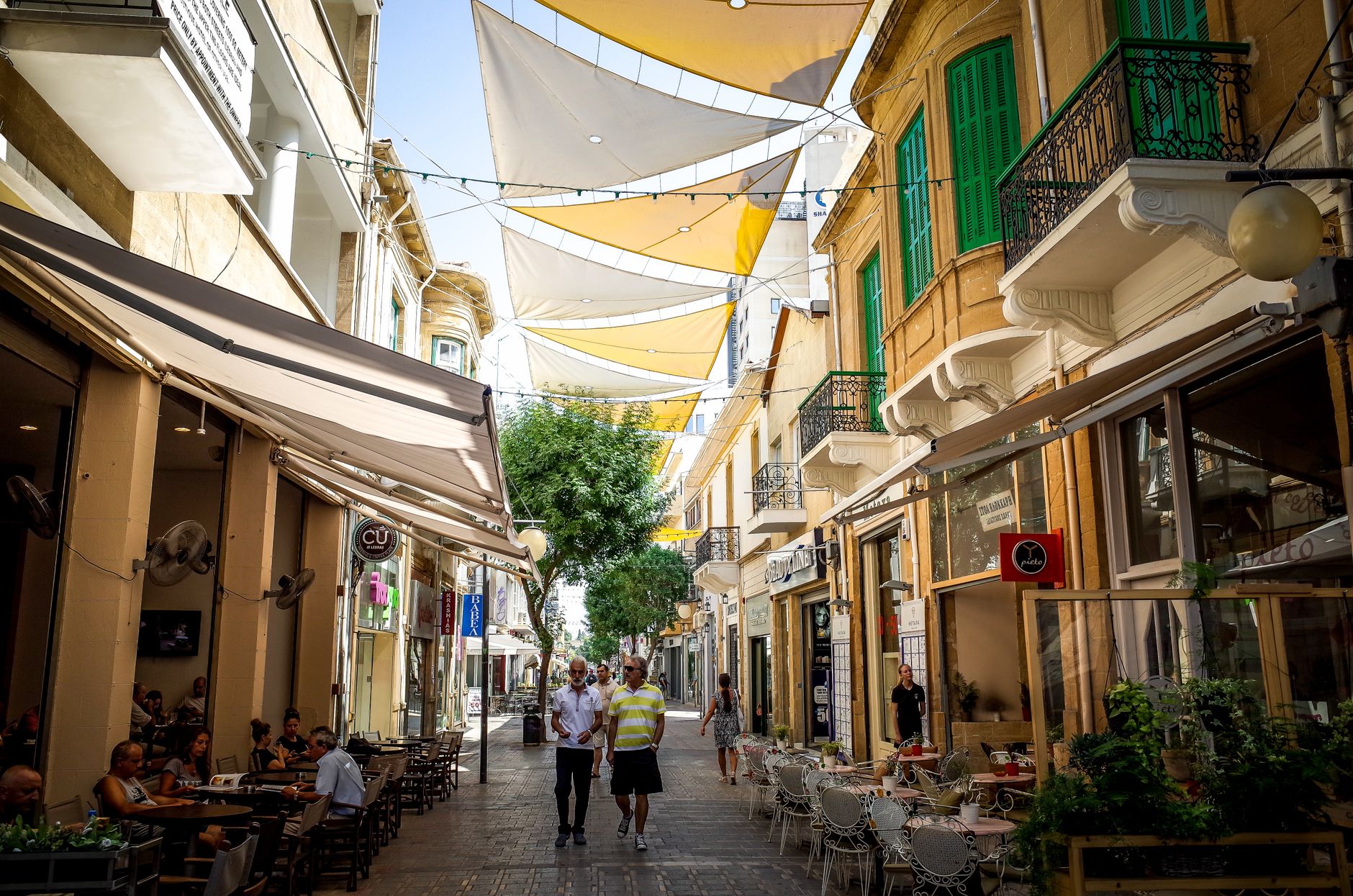
Follow an easy old city route
Start on Arasta Street after leaving the Ledra Street checkpoint. Its shops lead naturally towards Büyük Han, a restored Ottoman caravanserai with a courtyard, craft shops and places for tea or coffee.
A few minutes away, Selimiye Mosque dominates the skyline. The building began as a Gothic cathedral, then became a mosque during Ottoman rule. Dress modestly and avoid visiting during prayer times where access may be limited.
The nearby Bedesten is another important medieval building. Opening arrangements can change for restoration work or events, so treat it as a welcome stop rather than a fixed museum appointment.
Walk beyond the headline sights
Samanbahçe offers a different view of the city, with traditional housing streets rather than grand monuments. Kyrenia Gate, one of the old walled city’s entrances, is also worth the longer walk north.
Allow two or three unhurried hours for this route, including lunch. Northern Nicosia has good cafés and grill restaurants, but keep some Turkish lira for smaller purchases.
Sort money, mobile data and timing
Northern Cyprus uses the Turkish lira, while the Republic of Cyprus uses the euro. Many restaurants and larger shops accept cards, although small cash purchases are easier with lira.
Use an ATM if you need cash, but check your bank’s foreign transaction fees. Keep a small amount rather than withdrawing more than you can spend before returning.
Check your phone plan before crossing
UK roaming packages may treat the north differently from the Republic of Cyprus. Some phones connect to a Turkish mobile network near the Green Line, which can trigger unexpected charges.
Switch off data roaming if you are unsure, download an offline map and save your hotel’s address before setting off. In winter, the two sides can also use different clock times, so check the time on your phone before arranging a meeting or taxi.
Leave time for the return journey
Aim to return before you are tired, hungry or rushing for dinner. A delayed crossing is easier to handle when you have water, a charged phone and no fixed transport connection waiting.
We also suggest saving the checkpoint location on your map. Nicosia’s old lanes are charming, but they can make the route back less obvious than it seemed at lunchtime.
Build a fuller Nicosia itinerary
The crossing works well as one part of a longer day in the capital. Before or after visiting the north, spend time in the southern old town around Faneromeni Square, Laiki Geitonia and the streets near Ledra Street.
Give each side enough time. A rushed dash across the line can reduce a remarkable city to a tick-box stop.
Continue planning with Cyprus Travel Hub
- Nicosia Old City: a first-time visitor’s walking guide
- Cyprus entry requirements for UK travellers in 2026
- Driving in Cyprus for UK visitors
- Cyprus without a car: bases, buses and day trips
- Famagusta travel guide: history, beaches and border tips
Final thoughts
A Nicosia visit feels most rewarding when you give it time. The crossing itself is usually brief, but the history on either side deserves more than a hurried photo stop.
Bring your passport, use an official point and keep your hire-car plans realistic. With those details sorted, the Nicosia Buffer Zone Crossing becomes a memorable way to understand Cyprus beyond its beaches and resorts.
Pingback: Cyprus Currency Guide: Cash, Cards and Tipping
Pingback: Accessible Cyprus Travel: Wheelchair-Friendly Tips