Famagusta is one of Cyprus’s most rewarding places to explore, but it needs a little planning. The name can mean the historic walled city in the north, the wider district, or the beach resorts around Protaras and Ayia Napa.
In this Famagusta travel guide, we’ll help ourselves combine medieval streets, ancient ruins and clear-water beaches without getting caught out by the Green Line. A well-planned visit gives us far more than a quick photo stop.
Key Takeaways
- Famagusta city lies north of the Green Line, while beach resorts such as Protaras and Ayia Napa sit in the Republic of Cyprus’s Famagusta District.
- The Walled City, Othello Castle, Lala Mustafa Pasha Mosque and nearby Salamis reward anyone interested in Cyprus’s layered history.
- Fig Tree Bay, Konnos Bay and the Cape Greco coast are the strongest beach choices on the southern side.
- We can cross at the Deryneia checkpoint with a valid passport, but drivers need permission from their hire company and suitable insurance.
- Varosha is a sensitive place with restricted access, so we should follow current rules and treat it with respect.
First, understand which Famagusta we are visiting
The first useful detail is also the one that confuses most visitors. Famagusta city is on the island’s northern side, beyond the UN Buffer Zone. It is administered by the Turkish Cypriot authorities, although the Republic of Cyprus remains internationally recognised as the government of the whole island.
Meanwhile, the southern Famagusta District includes some of Cyprus’s most famous holiday areas. Protaras, Pernera, Ayia Napa and Cape Greco are all accessible from Larnaca Airport without crossing the Green Line.
That distinction changes how we plan accommodation, transport and sightseeing. Staying in Protaras gives us easy access to beaches and southern attractions. Crossing at Deryneia then makes the historic city a manageable day trip. Staying in the north puts the Walled City and Salamis close by, but needs different arrival and car-hire planning.
We should always check opening hours and crossing arrangements shortly before setting out.
Most UK visitors arrive at Larnaca Airport. From there, Protaras is roughly an hour by car, depending on traffic. Deryneia is nearer, while Ayia Napa sits to the east of the main motorway route.
The region suits a range of holidays. We can spend the morning tracing Venetian walls, swim in the afternoon, then eat grilled fish or meze by the sea. Yet the island’s divided history is never far away, and that calls for a thoughtful approach.
Famagusta’s historic heart: walls, churches and old streets
Famagusta rose to prominence under the Lusignan kings, when it became a wealthy eastern Mediterranean port. Merchants, pilgrims and crusaders passed through its harbour, leaving churches and trading houses behind.
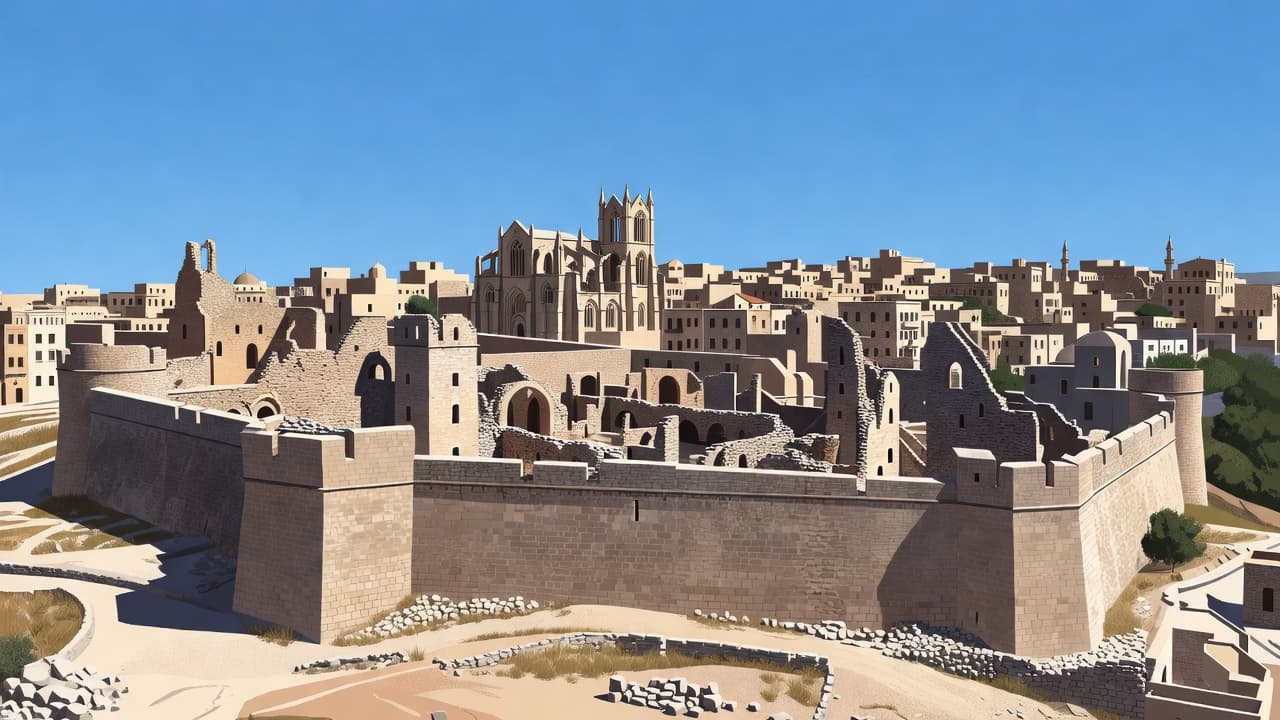
The city’s defensive walls still make the strongest first impression. Venetian engineers strengthened them in the 16th century, creating massive stone ramparts and bastions. Walking beside them shows how compact the old city is. We can cover much of it on foot, although uneven paving makes sturdy shoes a sensible choice.
Start at the Land Gate and Venetian walls
The Land Gate is a sensible starting point because it gives us a clear view of the fortifications. Inside the walls, narrow lanes lead towards cafes, small shops and the central square.
We should allow time to wander rather than rushing between landmarks. Famagusta’s appeal often lies in details, such as a carved doorway, a weathered Gothic arch or bougainvillea spilling over a courtyard wall.
Othello Castle is close to the harbour. Its name comes from the Shakespearean association with Cyprus, although the building’s history is tied more firmly to Lusignan and Venetian rule. The gate carries the winged lion of St Mark, Venice’s emblem.
See Lala Mustafa Pasha Mosque
At the centre of the old city stands Lala Mustafa Pasha Mosque, formerly the Cathedral of St Nicholas. Built in the Gothic style, it has buttresses, pointed arches and a facade that would look at home in a French medieval town.
After the Ottoman conquest of 1571, the cathedral became a mosque. A minaret now rises beside the western front. That change is part of Famagusta’s history, not a museum display, so we should dress modestly and follow any visitor guidance at the entrance.
The nearby Namik Kemal Dungeon is a small stop for those interested in literature and Ottoman-era history. The Turkish writer Namik Kemal was held here during the 19th century. It won’t take long, but it adds another layer to a walk through the city.
Make time for ancient Salamis
Salamis lies a short drive north of Famagusta and deserves at least half a day. This was one of ancient Cyprus’s great city kingdoms, with Roman baths, a theatre, gymnasium and wide avenues.
The theatre is the site’s visual highlight. However, the remains of the baths are equally evocative, with stone columns and sections of mosaic flooring. We should bring water, sun protection and shoes that cope with rough ground. There is little shade across much of the site.
We can pair Salamis with the nearby St Barnabas Monastery, where a museum and small church provide a quieter contrast to the open ruins. We should check access and opening times locally, especially outside the main holiday season.
Beaches around Famagusta District
The Famagusta coast has beach options for almost every mood. Some bays are busy and well-equipped, while others feel wilder, with pale limestone cliffs and sea caves.
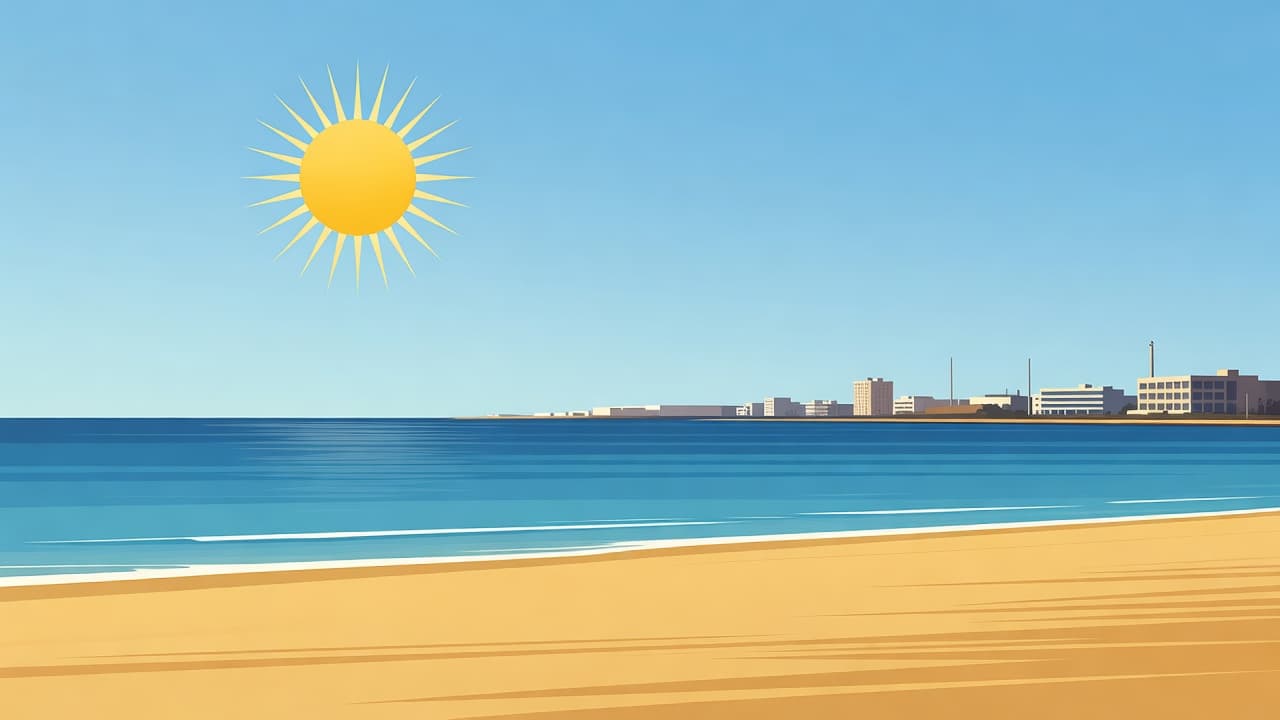
Fig Tree Bay and the Protaras coast
Fig Tree Bay is the obvious choice if we want soft sand, calm water and easy facilities. It sits in central Protaras, with restaurants, shops, sunbed hire and water sports nearby. A small islet just offshore gives confident swimmers a popular target.
Its popularity means it gets busy in July and August. We should arrive early, or visit in May, June, September or October when the water remains inviting but the shoreline is less crowded.
Pernera offers a slower-paced alternative. Its coves are smaller, and the promenade joins several beaches with sea views along the way. Families often prefer this stretch because it has shallow water and a more relaxed evening atmosphere.
Konnos Bay and Cape Greco
Konnos Bay lies between Protaras and Cape Greco National Forest Park. Pine-covered slopes frame a sheltered curve of sand, and the water often has a rich blue-green colour. It is beautiful, though the steep road down can feel awkward in high season.
Cape Greco is better for walking, snorkelling and cliff-top views than a traditional all-day beach session. We can follow paths to sea caves, natural rock arches and lookout points over the Mediterranean. We should take water with us, as facilities are limited once we leave the main roads.
The summer sun is intense. Midday temperatures often make exposed walks uncomfortable, so we prefer early morning or late afternoon. A swim at Konnos afterwards is a fine reward.
Beaches near Famagusta city
North of the crossing, Glapsides Beach is popular for its sandy shore and shallow water. It is convenient for visitors based around Famagusta city. Palm Beach, beside Varosha, has striking views of abandoned hotels and is a more thought-provoking place to swim.
Beach conditions vary with wind and season. Before choosing a quieter cove, we should check for flags, currents and any access restrictions. Cyprus’s clear sea can make distance look shorter than it is.
Varosha: visit with care and context
Varosha was once Famagusta’s glamorous beachfront resort. In the early 1970s, high-rise hotels and holiday homes lined its shore. Following the events of 1974, the area was fenced off and remained largely abandoned for decades.
Parts have reopened to visitors in recent years, but access rules and routes can change. We should check locally before travelling, respect barriers and stay on permitted paths. Drones are a poor idea here, as are attempts to enter closed buildings or fenced areas.
This is not an abandoned theme park. Varosha is tied to displacement, property claims and unresolved political issues. The silence of empty balconies and overgrown streets has real human weight.
We should treat Varosha as a place to understand Cyprus’s division, not as a backdrop for careless holiday photos.
A visit works best when we combine it with the Walled City. The contrast is stark: medieval Famagusta remains busy and lived-in, while Varosha shows a modern resort halted in time.
Border crossing tips for UK travellers
Crossing the Green Line is usually straightforward, but it isn’t something we should treat casually. The Deryneia checkpoint is the practical crossing for Famagusta city when staying in Protaras, Ayia Napa or the surrounding southern resorts.
We should carry our passport, not a photocopy. Border staff may scan it and issue a separate slip for the north. We should keep any paper given to us until we return. Checkpoint procedures can change, so we should allow extra time during summer weekends and public holidays.
The Republic of Cyprus entry requirements explain the official position on arriving in Cyprus. UK passport rules, visa conditions and entry requirements can change, so we should also read the latest Foreign, Commonwealth and Development Office advice before departure.
Use designated checkpoints only
The UN Buffer Zone is not a sightseeing route. We must cross only at an official checkpoint and never attempt to walk or drive across an unofficial point.
Deryneia is useful because it is close to the coast and Famagusta city. Nicosia has other crossings, including Ledra Street for pedestrians, but they make little sense for a beach-based Famagusta day trip.
Some travellers find queues brief, while others meet delays. The time often depends on traffic rather than paperwork. A morning crossing and an early-evening return usually gives us the best chance of avoiding the busiest period.
Driving across the Green Line
Driving adds flexibility, especially for Salamis and Varosha. However, this is where plans can unravel if we leave questions until the checkpoint.
Many southern car-hire firms do not allow their vehicles into the north. Others permit the trip but require written approval. We should ask before booking, then bring the relevant documents with us. We shouldn’t rely on a verbal promise at the rental desk.
Insurance is separate from permission. Republic of Cyprus policies often do not cover the north, so drivers may need to buy temporary third-party cover at the crossing. This is not the point to discover that our rental agreement excludes cross-border travel.
Before setting off, we should check these essentials:
- Take passports, driving licences, rental paperwork and any written cross-border permission.
- Confirm whether the hire car may enter the north and whether a mileage limit applies.
- Ask what cover is included, what must be bought at the checkpoint and how claims work.
- Keep some cash available, because card acceptance can vary outside larger towns.
- Photograph the vehicle before departure, then report any incident to the rental firm promptly.
Traffic drives on the left across Cyprus, which helps UK visitors. Road signs north of the Green Line commonly use Turkish place names, so we should download offline maps before leaving our accommodation. Mobile data allowances may also change once we cross.
Money, phones and everyday manners
The euro is used in the Republic of Cyprus. In the north, the Turkish lira is the main currency, although euros and pounds are sometimes accepted in tourist areas. We shouldn’t assume the exchange rate will be generous.
Cards work in many restaurants and larger shops, but cash remains useful for small purchases, parking and local cafes. We should withdraw enough for the day rather than carrying large sums.
Mobile networks can connect to Turkish providers near and across the Green Line. If our UK plan charges for non-EU roaming, we should switch off data roaming or buy an appropriate travel add-on before crossing.
A few Greek or Turkish greetings go a long way, but English is widely spoken in visitor areas. Political conversations deserve care. We can ask respectful questions, listen properly and avoid treating personal history as a debate topic.
A two-day Famagusta itinerary that balances both sides
With two days, we can enjoy the coast and still give Famagusta city proper attention. On day one, we’d base ourselves in Protaras or Pernera. Start at Fig Tree Bay before the crowds arrive, have lunch in Protaras, then walk at Cape Greco in the late afternoon.
The next morning, we’d cross at Deryneia with passports and any car documents ready. Begin in the Walled City, taking in Othello Castle, Lala Mustafa Pasha Mosque and the Venetian walls. Have lunch in the old town, then drive to Salamis for the afternoon.
If Varosha is on our list, we should check current access before replacing Salamis with it. Trying to squeeze the Walled City, Salamis, Varosha and a long beach stop into one day turns a memorable visit into a rush between car parks.
For a longer holiday, we can give each place its own pace. Spend a beach day around Protaras, reserve another for Famagusta and Salamis, then leave an unplanned morning for a favourite cove or a return walk through the old city.
Final thoughts on visiting Famagusta
Famagusta gives us a Cyprus holiday with far more depth than a single beach resort. We can swim in clear water, walk through centuries of history and see how the island’s past still shapes daily life.
The best trips allow time for both beauty and context. With passports ready, car insurance confirmed and an open-minded approach, Famagusta becomes one of the most memorable parts of Cyprus.