Paphos punches well above its size. For a city with a permanent population under 40,000, the concentration of UNESCO-listed archaeology, dramatic coastline, and genuine Cypriot culture is remarkable. But not every Paphos attraction earns equal weight, and a week here goes quickly. We’ve spent proper time covering this town — the sites everyone lists, the ones most guides overlook, and a few that genuinely disappoint despite the fanfare. This is an honest account of where to focus, what to add if the schedule allows, and what we’d quietly deprioritise on a short trip — or read our Paphos highlights guide for the essentials.
Paphos attractions we wouldn’t miss
The House of Dionysus mosaics, Kato Paphos Archaeological Park
Not “the Archaeological Park” as a general recommendation — specifically the House of Dionysus. This is the mosaic floor that justifies the whole visit. Over 550 square metres of detailed mythological scenes laid by Roman craftspeople in the 2nd and 3rd centuries AD: Dionysus in his chariot drawn by panthers, Narcissus at his reflection, the first known mosaic depiction of Pyramus and Thisbe, and hunting scenes of precision that make it hard to believe these tiles spent centuries underground. The detail holds up under close inspection in a way that photographs never quite convey.
The rest of the Archaeological Park earns its time too — the House of Theseus has a large Theseus and the Minotaur mosaic, the Roman Odeon hosts summer performances in an intact open-air setting, and the castle ruins at the edge of the site give context to the wider ancient cityscape. But the House of Dionysus is the centrepiece. Go early (gates open at 8:00) — see our Paphos sightseeing guide for a full day plan, give the whole site two to three hours, and don’t attempt to combine it with the Tombs of the Kings on the same morning. Each needs time to breathe.

Tombs of the Kings — specifically Tomb 3
The Tombs of the Kings appear on every Paphos list, but most coverage treats the site as a single attraction rather than directing visitors toward the best part. Tomb 3 — with its Doric colonnade around a full sunken peristyle courtyard and Egyptian-influenced carved detail — is the one that earns the visit. The scale only becomes clear when you descend into the courtyard and stand inside it: columns rising from sandstone, chambers branching off in the cool dark, a silence that feels earned by 2,400 years.
The full necropolis rewards exploration — fourteen main tombs spread across a rocky coastal plateau, some with intact fresco traces, most with that particular quality of light and shadow that underground limestone architecture produces on a sunny day. Entry is around €2.50. The underground chambers stay cool even at peak summer, which feels like a gift after the exposed Archaeological Park paths. Wear shoes with grip throughout — steps and paths are consistently uneven.

Aphrodite’s Rock at late afternoon
Petra tou Romiou — Aphrodite’s Rock — is 25km east of Paphos on the road toward Limassol. The mythology is well known: Hesiod wrote of Aphrodite’s birth from sea foam near Cyprus in the 7th century BC. The geology makes the claim feel plausible: limestone sea stacks rising from open water on a stretch of coast that is genuinely dramatic and largely unbuilt.
When we go matters as much as whether we go. At midday, with tour coaches in the car park and flat overhead light, the rock looks like a postcard of itself — recognisable, technically impressive, slightly underwhelming. From around 17:00, the limestone turns golden, the stacks acquire depth and shadow, and the light on the water shifts from flat midday blue to something altogether richer. The drive back to Paphos at dusk along the coastal road, with a wine estate stop near Koilani if the schedule allows, makes a complete late afternoon out of town. Free to visit, 30 to 45 minutes on site. The sea here is usually rough — this is a walk and a viewpoint rather than a swimming destination.

A Blue Lagoon boat trip from Latchi
The Blue Lagoon at the Akamas Peninsula makes every Paphos list and belongs on all of them. The water colour is real — a clear blue-green in a sheltered bay surrounded by national park coastline with no resort infrastructure — and the experience of swimming there from a boat, with the rocky hills of Akamas visible above and nothing commercial in sight, is one of the best days Cyprus offers.
The approach: drive to Latchi harbour (45 minutes north of Paphos), take a morning boat trip to the lagoon, get in the water, snorkel if kit is available, return to Latchi for lunch at the harbour fish restaurants, and drive back along the coast. That structure fills a day well and leaves room for a detour to Agios Georgios church near Peyia on the return leg. Book the boat trip in advance in July and August — morning slots on the better boats fill quickly. Shoulder season (May or September) gives the same water in better conditions with fewer people on it.
What we’d add if the schedule allows
Agios Neophytos Monastery
Most first-timers skip Agios Neophytos because it doesn’t appear on the major-sights shortlist. That’s a mistake. The 12th-century hermit Neophytos carved his own living quarters into a cliff face here, decorated the cave chapel — the Enkleistra — with Byzantine frescoes, and wrote prolifically about Cyprus’s history during the Crusader and Byzantine periods. The cave is small, painted floor to ceiling, and completely unlike the open-air archaeological scale of the main Paphos sites. It takes about an hour, it’s 9km north of Paphos toward the Troodos foothills, and it adds a dimension of intimacy and strangeness that the larger ruins don’t provide. Entry is modest — around €2.50 — and the monastery grounds above are peaceful and free.
Fabrica Hill
Five minutes’ walk from the Archaeological Park entrance, Fabrica Hill has ancient quarry caves cut into the limestone, a small rock-cut theatre dating from the Hellenistic period, and the best free view across Kato Paphos and the coast. Almost nobody visits it specifically — it’s not on maps in the way the main sites are — and almost everyone who comes across it is glad they did. Add it to any morning at the Archaeological Park: no entry fee, 30 to 40 minutes, and genuinely useful for the sense of scale it provides across the wider ancient landscape stretching down to the sea.
An afternoon in Ktima (Paphos Old Town)
Upper Paphos — Ktima — operates at a different rhythm from the resort strip around the harbour. The municipal market is authentic rather than tourist-facing, the coffee shops around Kenedy Square serve local clientele who’ve been coming for decades, and the Archaeological Museum nearby holds finds from the wider Paphos district that contextualise everything we’ve seen at the park and tombs. Not spectacular, but genuinely Cypriot in a way the harbour promenade isn’t. Worth a half-morning when we want a break from the pace of sightseeing.
What we’d deprioritise on a short trip
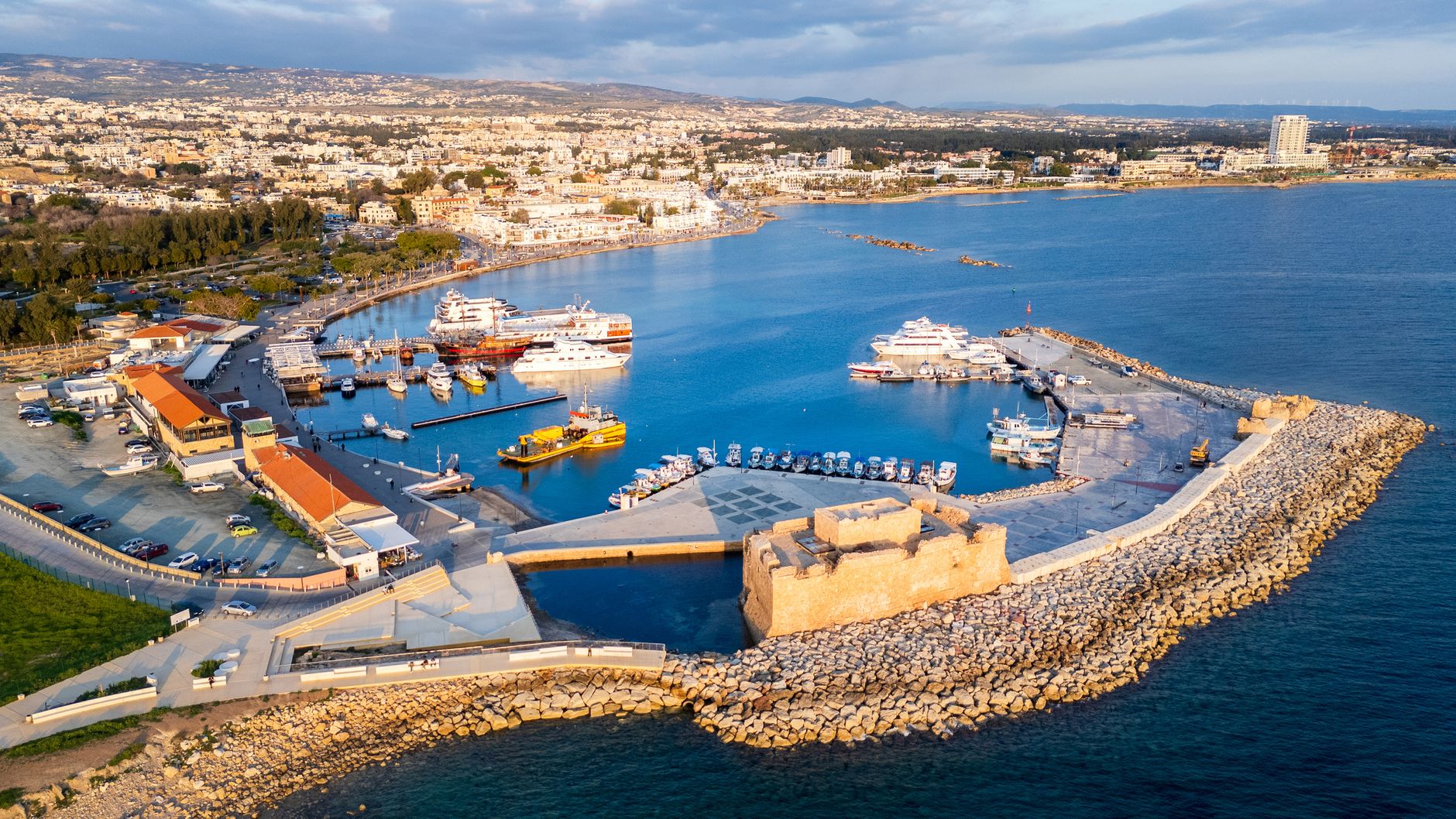
The harbour castle interior is worth doing once — the rampart views across the fishing boats and out to sea are good — but at €2.50 entry the interior rooms are sparse. If time is limited, the harbour promenade itself gives more for free than the castle interior offers for the fee.
The Paphos Bird and Animal Park near Peyia is a solid family option on a hot afternoon but adds little for adults travelling without children. It’s not specific to Cyprus and the time could be better spent at Coral Bay beach or exploring the Sea Caves north of Paphos.
Attempting to combine Akamas and a Troodos village in a single day is one of the most common itinerary mistakes we see. Both deserve proper time and attention. Akamas is a full day if approached properly via boat from Latchi. A Troodos mountain village circuit — Omodos, Kakopetria, a painted church or two — is another full day with a completely different character. Attempting both in one rush produces a compressed version of each that does justice to neither.
Paphos attractions: quick comparison
| Attraction | Entry fee | Time needed | Best for |
|---|---|---|---|
| House of Dionysus / Archaeological Park | ~€6.50 | 2–3 hours | Roman mosaics, ancient history |
| Tombs of the Kings | ~€2.50 | 1–1.5 hours | Underground atmosphere, Hellenistic scale |
| Aphrodite’s Rock | Free | 30–45 mins | Coastal scenery, mythology, sunset |
| Blue Lagoon (Akamas) | Boat ~€25–35 | Full day | Swimming, snorkelling, wild coastline |
| Agios Neophytos Monastery | ~€2.50 | 1 hour | Byzantine frescoes, intimacy, quiet |
| Fabrica Hill | Free | 30–40 mins | Views, hidden archaeology, no crowds |
Frequently asked questions about Paphos attractions
Which is better — the Archaeological Park or the Tombs of the Kings?
They’re different enough that direct comparison doesn’t quite hold. The Archaeological Park is richer in visual content — more to see across a larger site, with the House of Dionysus mosaics as a centrepiece that can occupy an entire morning. The Tombs of the Kings are more atmospheric in a minimal way — underground scale, silence, and 2,400 years of age without decoration. The ideal is to visit both on separate mornings. If forced to choose just one: the Archaeological Park, specifically for the House of Dionysus mosaics, which are among the most impressive Roman remains in the eastern Mediterranean.
Is Coral Bay beach better than Paphos town beach?
Yes, noticeably. The town beaches at Paphos are narrow, often pebbly, and convenient rather than impressive. Coral Bay is a proper sheltered crescent with soft sand and clear water suitable for swimming — a 10-minute drive north that makes a real difference to a beach day. For the best easily accessible swimming near central Paphos, Coral Bay is consistently the right answer.
How much time do we need in Paphos overall?
Four full days covers the non-negotiables without rushing: one day for the Archaeological Park and harbour, one for the Tombs of the Kings and Coral Bay, one for Akamas and the Blue Lagoon, one for Aphrodite’s Rock and a coastal drive or wine estate visit. A week adds the Troodos mountains, Agios Neophytos, Fabrica Hill, Old Town Ktima, and enough slow time at the harbour to feel like the holiday has actually landed rather than just passed through.
What’s the most underrated Paphos attraction?
Fabrica Hill — a free rocky viewpoint five minutes from the Archaeological Park entrance that almost no one visits deliberately. And Agios Neophytos Monastery, which consistently delivers more than its modest profile on travel lists suggests. Of the paid attractions, the summer Roman Odeon performances at the Archaeological Park are genuinely worth checking dates for — open-air theatre in an intact ancient setting, on-site, at a scale that makes the entrance fee feel straightforwardly reasonable.
Do we need a car to see the main Paphos attractions?
For the central sites — the Archaeological Park, Tombs of the Kings, the harbour, and Fabrica Hill — a car isn’t necessary. All are walkable from central Kato Paphos. For Aphrodite’s Rock, Agios Neophytos, Coral Bay, and especially Akamas, a hire car is effectively essential. Bus connections exist to some of these but are slow and infrequent. Hiring a car for at least two or three days of a Paphos week is the single most useful logistical decision for getting real value from the wider region.