Nicosia is the only European capital where a normal sightseeing walk can bring you to an international crossing point. Nicosia Old City rewards visitors who give it more than a quick lunch stop, because its compact lanes hold Venetian walls, Ottoman courtyards, museums, markets and a lived-in divided city.
On a first visit, we’d allow a full day and walk both sides of the Green Line. You can see the essentials at an easy pace, eat well and still leave room for side streets that don’t appear on a standard itinerary.
Start with the city’s unusual history, then let the streets set the pace.
Why Nicosia feels unlike any other capital
Nicosia is known as Lefkosia in Greek and Lefkosa in Turkish. It has been Cyprus’s political and commercial centre for centuries, yet its old town feels more intimate than most capital-city centres.
The 1974 division still shapes daily life. A United Nations buffer zone cuts through the city, separating the Republic of Cyprus-controlled south from the Turkish Cypriot-administered north.
History is part of the street scene
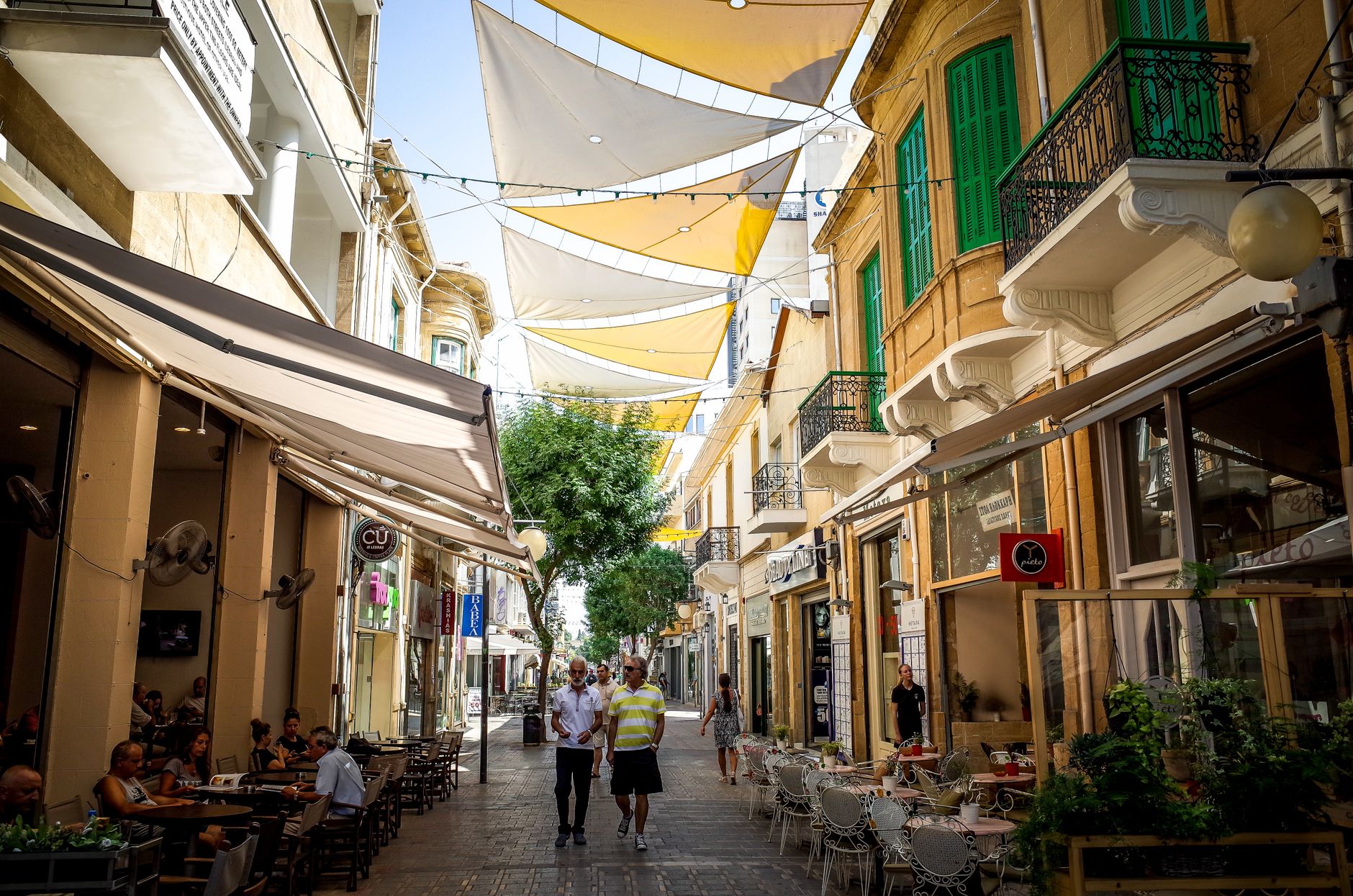
In many historic cities, walls and gates sit apart from modern life. Here, a checkpoint stands at the end of Ledra Street, one of the main shopping streets in the south.
Walk a few minutes away and you will find shuttered houses beside cafés, restored workshops and religious buildings with long, complicated histories. The contrast is most striking when you see it on foot.
Two sides, one walkable centre
The crossing changes the language on shop signs, the currency in tills and the feel of the streets. However, this is not a theme park split into neat halves.
Families live, work and study on both sides. We find that treating the city as a place with a difficult history, rather than a novelty border experience, leads to a better visit.
Venetian walls and the shape of the old town
The old city sits inside a near-circular ring of Venetian fortifications. Venetian rulers rebuilt the defences between 1567 and 1570, creating eleven heart-shaped bastions and three grand gates.
The walls cover almost five kilometres, although you cannot walk the full circuit without leaving the most interesting central lanes. The official Old Lefkosia walking route gives useful background before you set out.
Start with Famagusta Gate
Famagusta Gate, also called Pyli Ammochostou, is the most impressive surviving entrance on the southern side. Its vaulted stone tunnel gives a strong sense of how controlled entry once was.
The gate now hosts exhibitions and cultural events, so check the current programme before making a special trip. Nearby streets are quieter than Ledra Street and make a good place to begin exploring.
Use the gates to stay oriented
Paphos Gate lies on the western side of the southern old town. Kyrenia Gate is on the northern side and is a useful marker if you continue beyond the central market area.
You do not need to memorise every bastion. Still, knowing the three gates helps when Google Maps appears confused by narrow lanes, pedestrian areas and the buffer zone.
A one-day Nicosia Old City walking route
This route gives you a rounded first look at Nicosia Old City without turning the day into a race. Wear comfortable shoes, carry water and begin before the afternoon heat builds.
Morning: museums, lanes and views in the south
Begin around Ledra Street, then take the lift up the Shacolas Tower Museum and Observatory. Its viewing floor offers the clearest panorama of the old city, the walls and the divide running through the centre. Check the seasonal observatory hours before you go.
Afterwards, walk south through Laiki Geitonia’s restored lanes towards the Leventis Municipal Museum. The museum gives the buildings around you more meaning, covering Nicosia’s history through archaeological finds, maps and everyday objects.
Continue to Omeriye Mosque and the nearby hammam. Even if you do not enter every building, this part of town is good for noticing carved doorways, tiny courtyards and older houses behind newer shopfronts.
Early afternoon: cross at Ledra Street
Return to Ledra Street with your passport ready. Cross into the north, then pause on the other side instead of rushing straight to the major sights.
Arasta Street has a more market-led feel, with souvenir shops, bakeries and stalls selling small household goods. Take time for lunch or a Cyprus coffee before heading to the historic core.
Late afternoon: Selimiye Mosque and Buyuk Han
Walk first to Selimiye Mosque, whose Gothic structure makes it one of Cyprus’s most memorable religious buildings. Then continue a few minutes to Buyuk Han, a former caravanserai built during Ottoman rule.
Finish in the small residential area of Samanbahce if time allows. It is a quieter change from the busy centre, so keep your voice down and remember that people live here.
Crossing the Green Line without stress
Crossing on foot is straightforward when you arrive with the right documents and realistic expectations. It is still an official control point, so follow instructions and avoid treating it as a casual photo opportunity.
Bring your passport and use a legal arrival route
UK passport holders can visit Cyprus without a visa for stays of up to 90 days. The FCDO entry requirements for Cyprus also make clear that time spent in the north counts towards that same 90-day allowance.
Carry your physical passport, even if you have photos of it on your phone. If you plan to visit both sides, fly into Larnaca or Paphos rather than Ercan Airport. The Republic of Cyprus considers entry through airports or ports in the north illegal.
Choose the right crossing point
Ledra Street and Ledra Palace are pedestrian-only crossing points. Ledra Street is more convenient for this walking route, while Ledra Palace is useful if you are staying west of the centre.
If you are driving, Agios Dometios is the relevant central crossing point. The Cyprus Customs Green Line rules confirm which crossings allow pedestrians and vehicles.
Keep your passport, money and phone ready before approaching the checkpoint. Photographing guards, barriers or military positions can cause problems.
Queues vary with the season and time of day. Allow a little slack in your plans, particularly if you have a booked dinner, tour or bus to catch.
Historic landmarks worth your time
The best sights are close together, but each tells a different chapter of Nicosia’s history. Choose a few and spend time looking properly rather than trying to tick off every landmark.
Southern old-town highlights
The Leventis Municipal Museum is the best place to begin if you want context. Its displays help connect Venetian, Ottoman, British and modern periods without making the visit feel like a history lesson.
Omeriye Mosque is another important stop. It was once an Augustinian church, then became a mosque after the Ottoman conquest of 1570. The nearby Omeriye Hammam continues the area’s long bathing tradition.
The Archbishop’s Palace and the Cathedral of St John sit further east. Their ornate interiors and religious art are worth seeking out when opening times allow.
Northern old-town highlights
Selimiye Mosque began life as the Gothic Cathedral of St Sophia. Ottoman rulers converted it into a mosque after taking Nicosia in 1570, adding the two slender minarets that now define its skyline.
Buyuk Han, completed soon afterwards, was an Ottoman caravanserai where travelling merchants rested with their goods and animals. Its two-storey arcade now contains craft shops, galleries and cafés around a central courtyard.
Do not miss the smaller Kumarcilar Han nearby. It is less polished than Buyuk Han, but its worn stone and compact scale give it a more immediate sense of age.
Food and coffee on both sides
A day in the old city is better when you treat food as part of the route. Avoid settling for the first tourist menu on Ledra Street, especially when you have time to wander a block or two.
Look for small Cypriot snacks
Eliopites are savoury olive-filled pastries that make an easy breakfast or mid-morning snack. Bakeries also sell sesame-covered koulouri, cheese pies and sweet pastries that travel well in a bag.
For a proper meal in the south, look for a small taverna away from the busiest shopping stretch. Ask about dishes prepared that day rather than ordering a large menu of familiar holiday staples.
Take a slower coffee break in the north
In the north, you will see Turkish coffee alongside Cyprus coffee, tea and fresh pastries. Order the name a venue uses, then enjoy it with a little time to spare.
Courtyard cafés around Buyuk Han are pleasant, though you will usually pay more than at a backstreet local spot. We like to use the courtyard for coffee, then eat elsewhere if we want a quieter, more substantial meal.
Money, transport and practical details
The southern side uses euros. Turkish lira is the everyday currency in the north, although some tourist-facing businesses also accept euros.
Carry a little cash on each side
Cards work in many restaurants, shops and larger attractions. However, small bakeries, market stalls and independent cafés may prefer cash.
Use an ATM if you need Turkish lira, and check the rate before accepting a conversion option on a card machine. Keep a few small notes for coffee, snacks and low-cost purchases.
Leave the car outside the old town
Nicosia’s historic centre is compact, and this route works best on foot. A car becomes more trouble than help once you reach narrow lanes, pedestrian streets and limited parking.
Rental cars need extra care if you want to cross into the north. Get written permission from the hire company before booking, then confirm the insurance cover in writing. Policies differ by provider, vehicle and crossing point.
Check the latest FCDO Cyprus travel advice before departure, particularly if you are planning a wider road trip across the island.
How the atmosphere changes across the Green Line
Ledra Street in the south has international shops, banks and busy pavement cafés. Yet the most rewarding southern streets are often the quieter ones near Omeriye, Laiki Geitonia and Famagusta Gate.
Across the crossing, the lanes tighten around Selimiye Mosque, Arasta and Buyuk Han. Turkish lira prices, Turkish-language signs and market stalls make the transition clear within minutes.
Look beyond the obvious contrasts
Both sides have tourist shops, students, old houses and independent cafés. Each has polished areas beside buildings that need care.
The difference is not simply modern south and traditional north. Nicosia has changed under several administrations, and its architecture keeps evidence of each period.
Show care around the buffer zone
The buffer zone is part of people’s present lives, not a backdrop for dramatic photographs. Some streets end suddenly at barriers or abandoned buildings.
Stay on public routes, respect signs and do not enter blocked-off areas. A polite greeting in Greek or Turkish is appreciated, while English is widely understood in visitor-facing places.
Mistakes that can waste a first visit
A few simple choices make the day easier.
| Common mistake | Better approach |
|---|---|
| Starting after lunch in August | Begin early, visit indoor museums at midday and cross later. |
| Leaving your passport at the hotel | Carry it securely if you might cross the Green Line. |
| Assuming a rental car can cross | Confirm written permission and insurance before collecting the car. |
| Only walking Ledra Street | Take side streets for Famagusta Gate, Omeriye, Samanbahce and the hans. |
Nicosia’s pleasure lies in the details. Give yourself permission to pause for a shaded courtyard, a bakery window or an unexpected view of the walls.
Related Cyprus travel guides
Continue planning your Cyprus holiday with these useful next reads:
- Driving in Cyprus for UK visitors
- Cyprus without a car: bases, buses and day trips
- Cypriot food: what to eat, order and savour in Cyprus
- Cyprus entry requirements for UK travellers in 2026
- Larnaca vs Paphos airport: which should we fly to?
Final thoughts
Nicosia’s divided centre asks you to slow down and pay attention. The strongest visit combines the Venetian walls, major landmarks and a respectful Green Line crossing with time for coffee, food and unscripted streets.
Give Nicosia Old City a full day, carry your passport and stay curious beyond Ledra Street. Its history is visible everywhere, yet it remains a working capital where daily life continues on both sides of the line.
Frequently asked questions
Is one day enough for Nicosia Old City?
One full day is enough for the main southern and northern sights if you walk and cross at Ledra Street. Stay overnight if you enjoy museums, food stops and unplanned wandering.
Can UK visitors cross the Green Line in Nicosia?
Yes, UK visitors can cross at designated points with a valid passport. Ledra Street and Ledra Palace are for pedestrians, while Agios Dometios handles vehicles.
What is the best viewpoint in Nicosia?
The Shacolas Tower Museum and Observatory gives the clearest central view across the old town. You can see the Venetian walls, the Green Line and the wider city spreading beyond them.